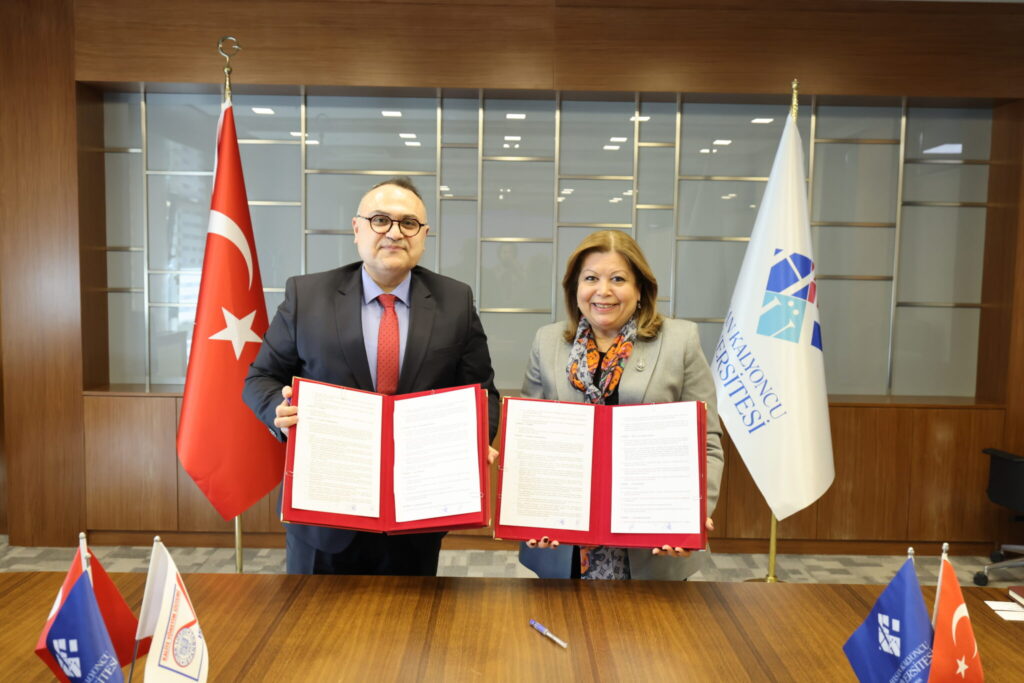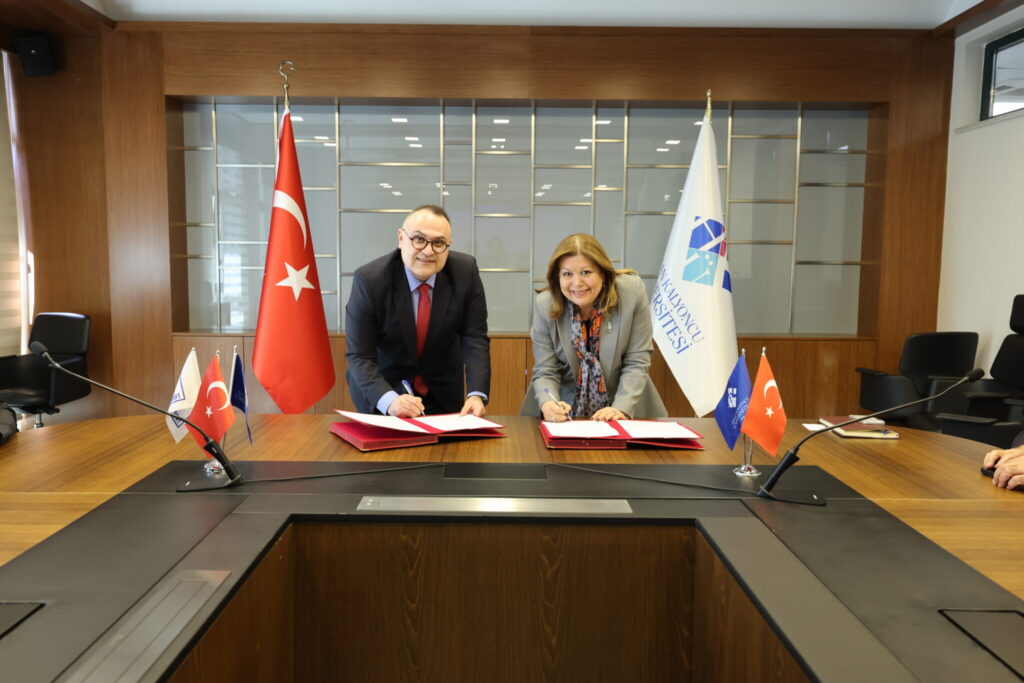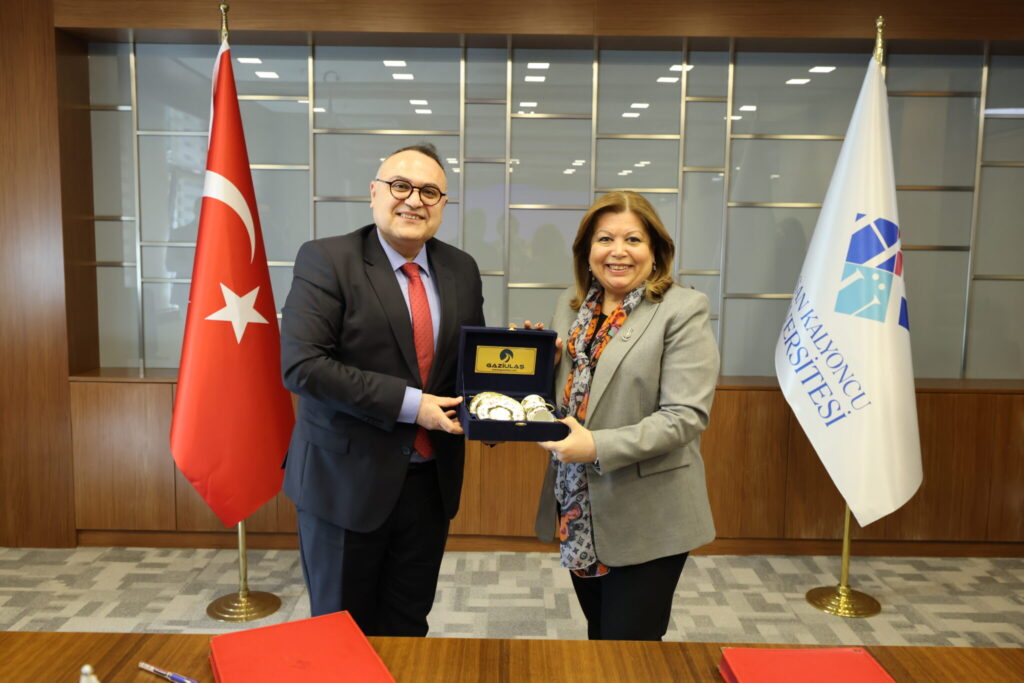
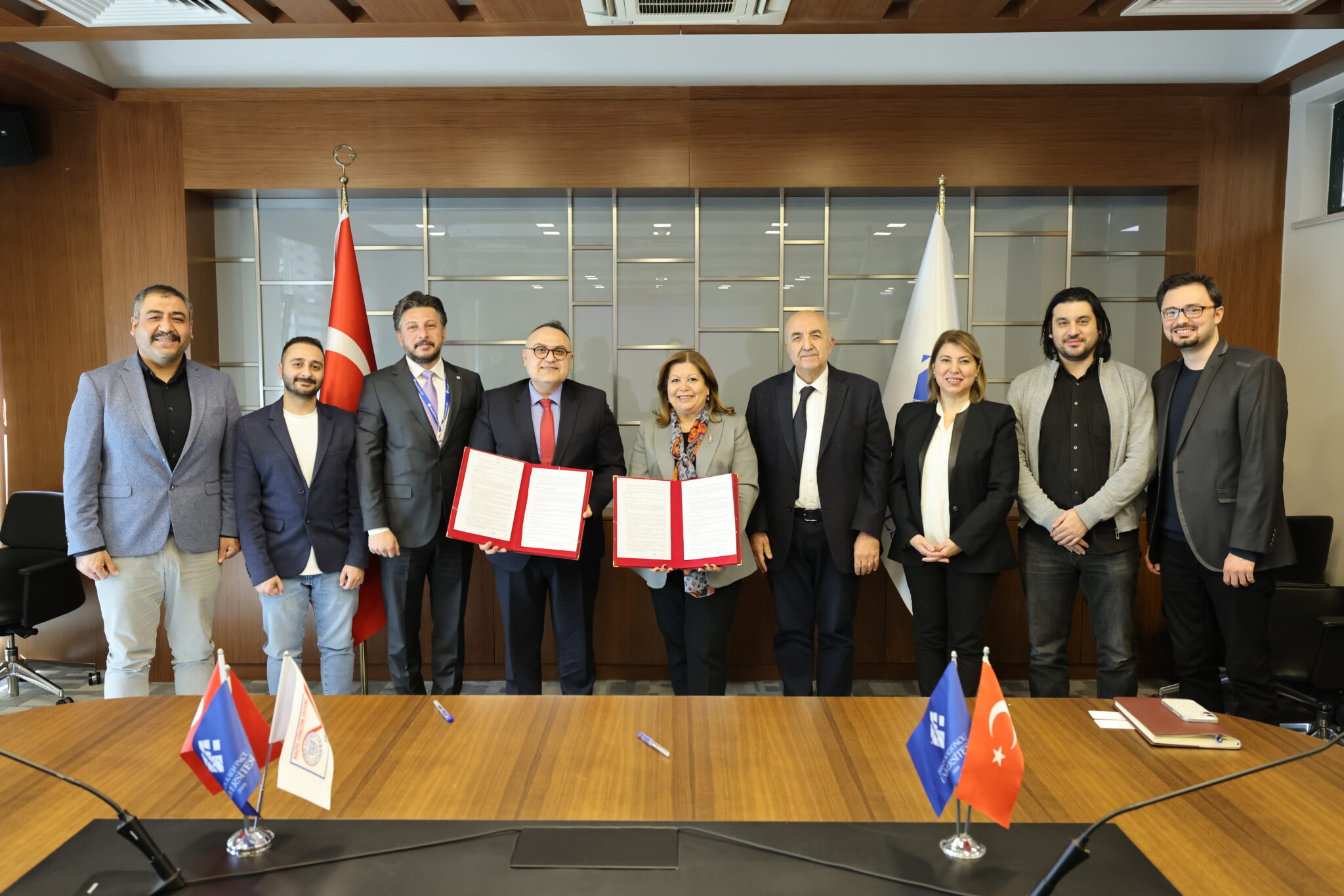
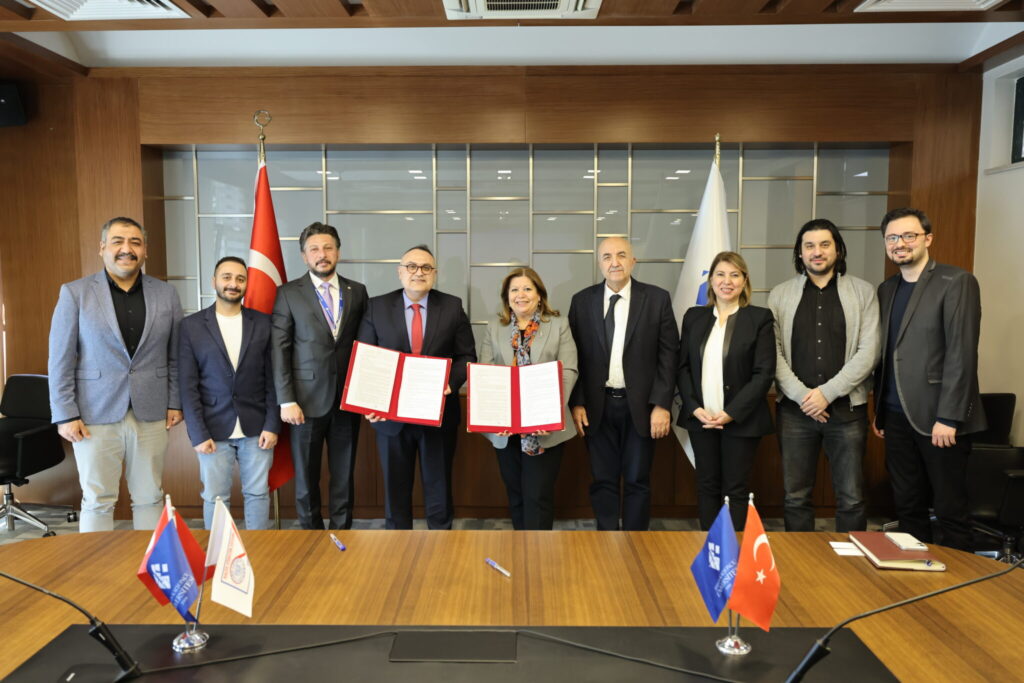
A cooperation protocol aimed at developing urban transportation systems was signed between Hasan Kalyoncu University (HKU) and Gaziantep Ulaşım ve Bilişim Hizmetleri A.Ş. (GAZİULAŞ).
The protocol signing ceremony, held in the HKU Rectorate Senate Hall, was attended by HKU Acting Rector Prof. Dr. Gül Rengin Küçükerdoğan, GAZİULAŞ General Manager Aykut Çakıroğlu, HKU Secretary General Ümit Şahnaoğlu, and Assoc. Prof. Dr. Şafak Tercan, faculty member in the Department of Civil Engineering, HKU Faculty of Engineering.
Under the signed protocol, it is planned to carry out artificial intelligence and machine learning-based data analysis studies for the development of urban transportation services, to conduct scenario and simulation studies for transportation systems using big data analytics and digital twin technologies, and to develop smart transportation solutions and carry out field tests. In addition, cooperation will take place in areas such as undergraduate and graduate thesis projects, internship programmes, technical training and joint academic publications. The protocol also aims to support joint project development and implementation activities targeting national and international funding sources such as TÜBİTAK, the European Union and development agencies.
We Aim to Turn Our Academic Knowledge into Urban Projects
HKU Acting Rector Prof. Dr. Gül Rengin Küçükerdoğan, who commented on the signed protocol and noted that it is an important step strengthening university–city cooperation, said: “Bringing the knowledge-producing power of universities together with the needs of cities is of great importance for sustainable development. Through this cooperation with GAZİULAŞ, we aim to turn our academic knowledge into projects that will contribute to the development of urban transportation systems. I believe that the joint work to be carried out in the fields of artificial intelligence, big data and smart transportation technologies will bring important benefits both to our students and to our city’s transportation infrastructure.”