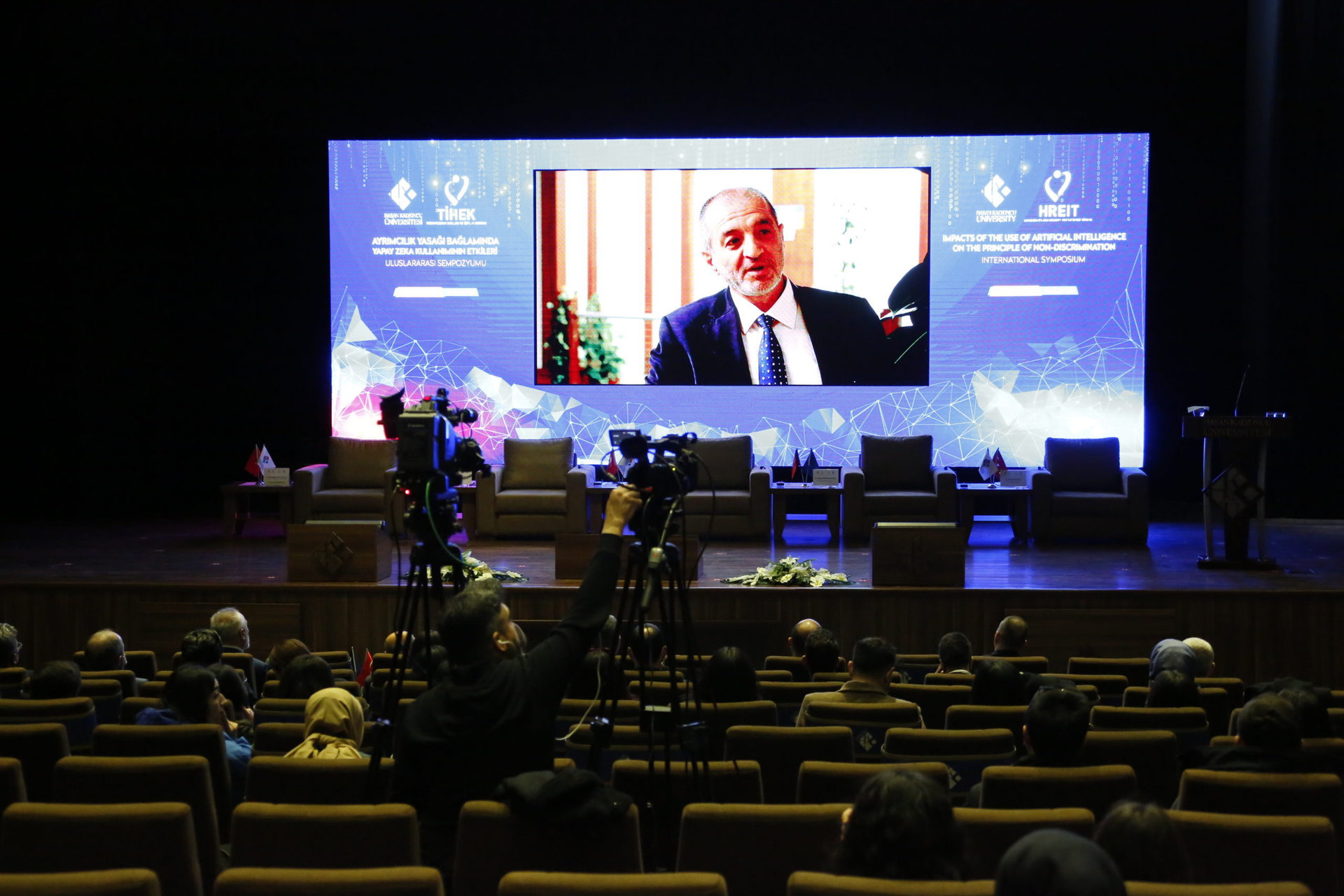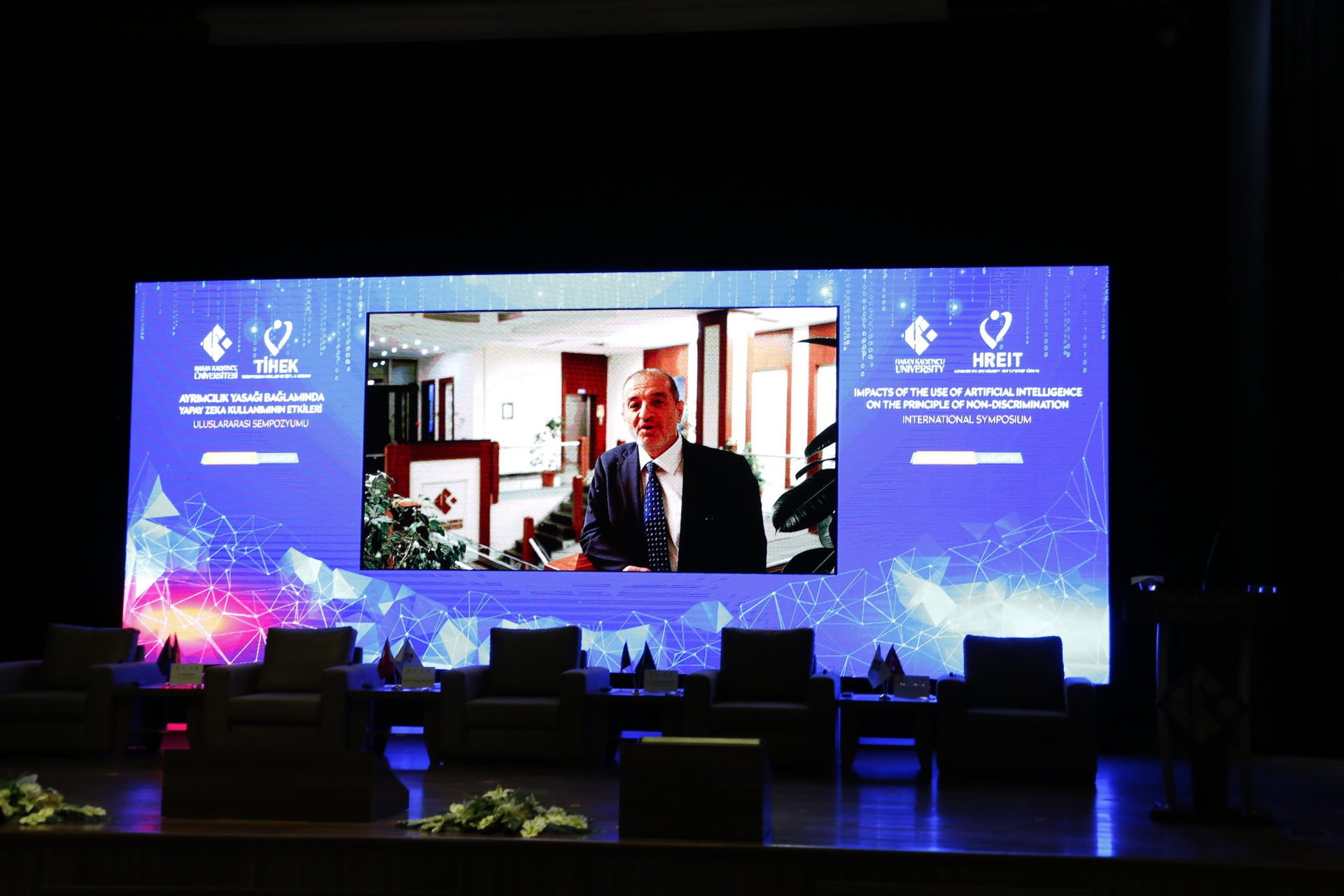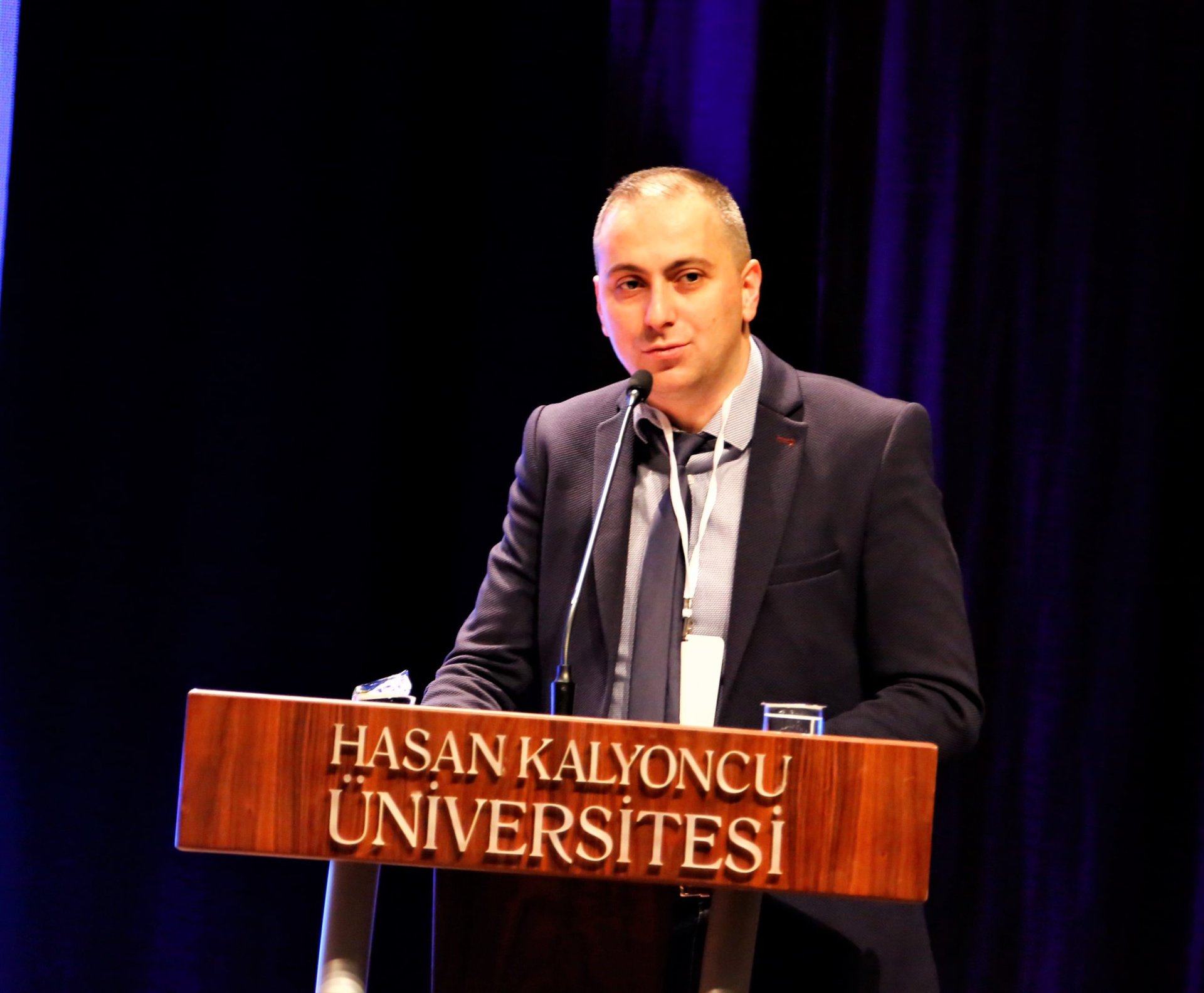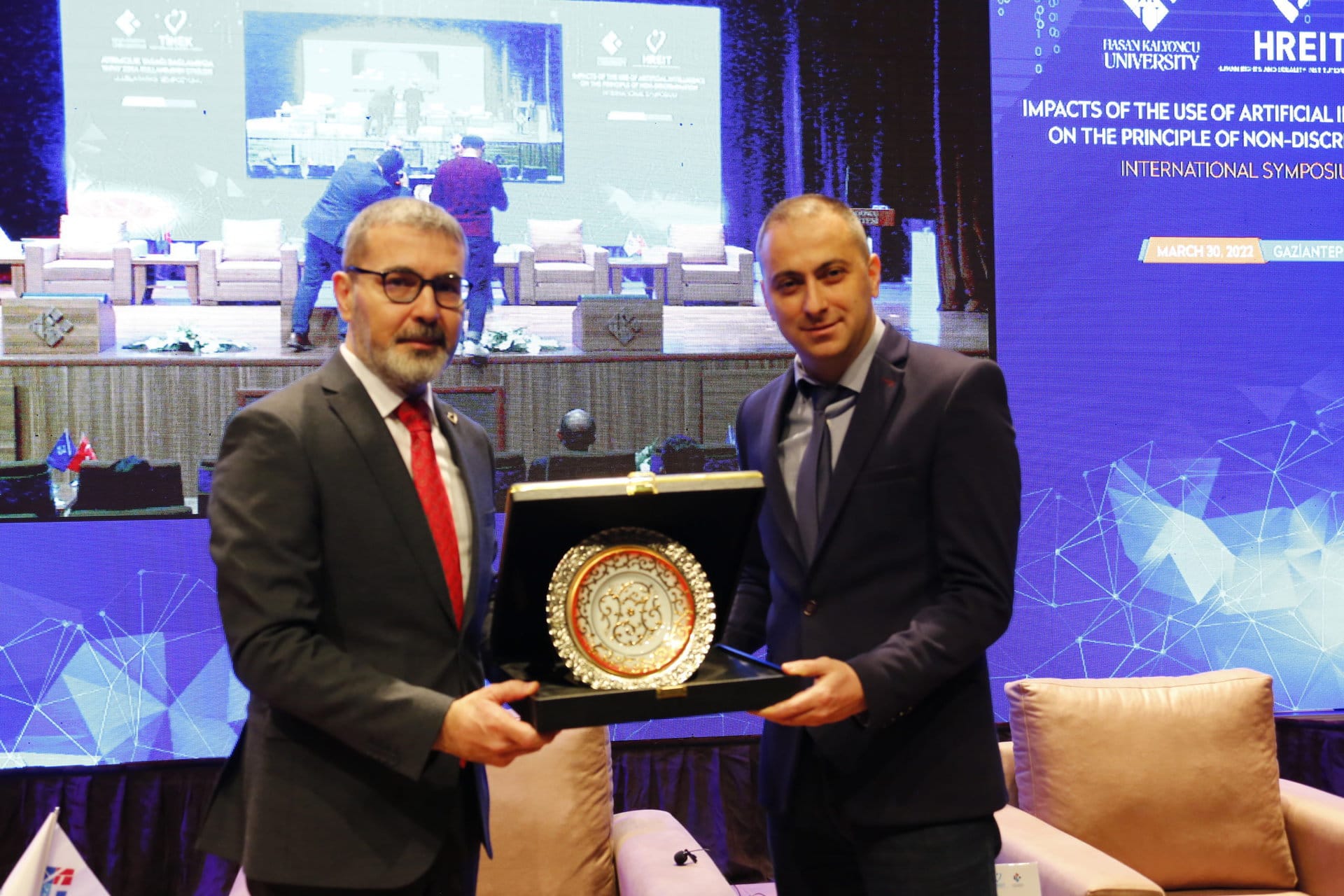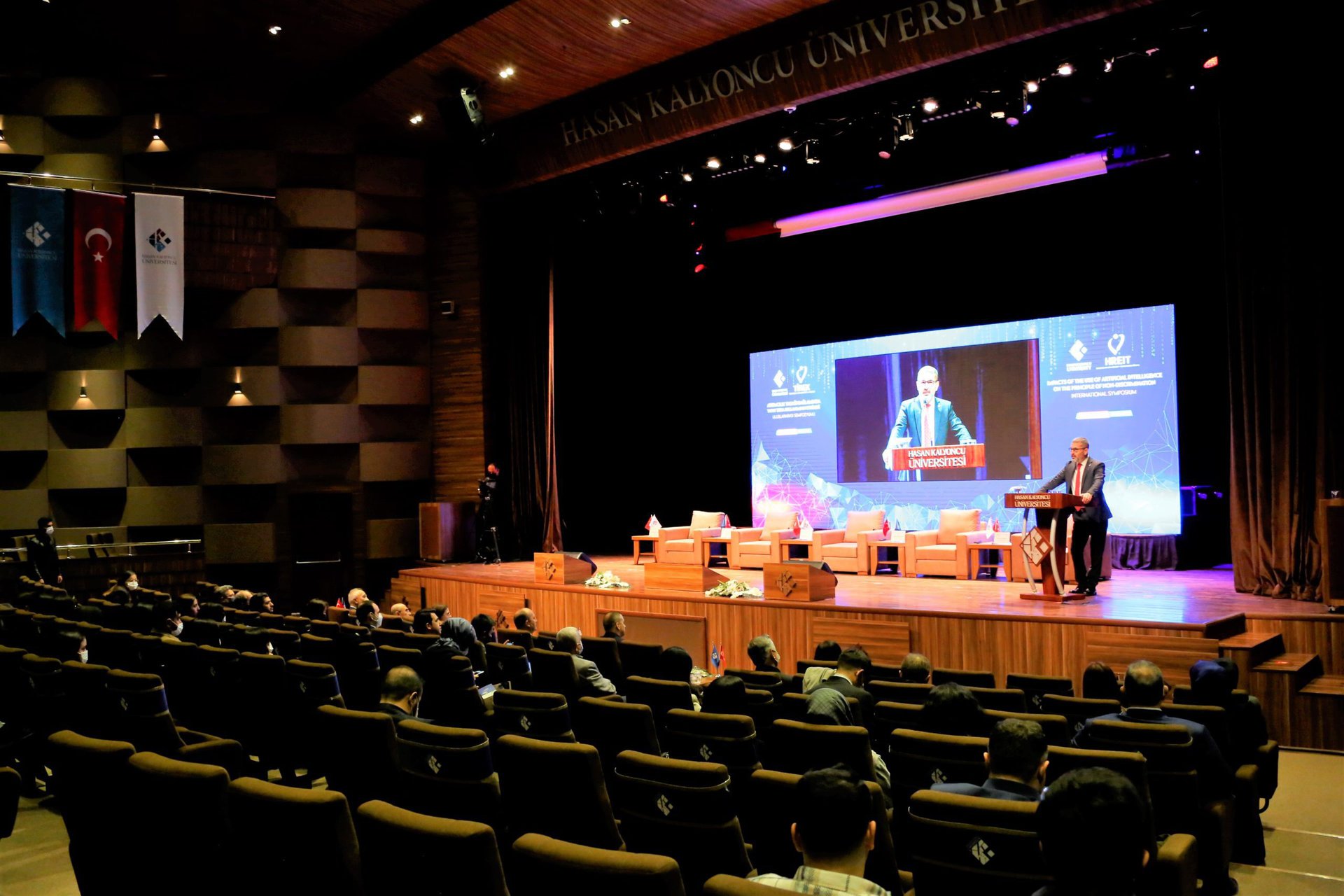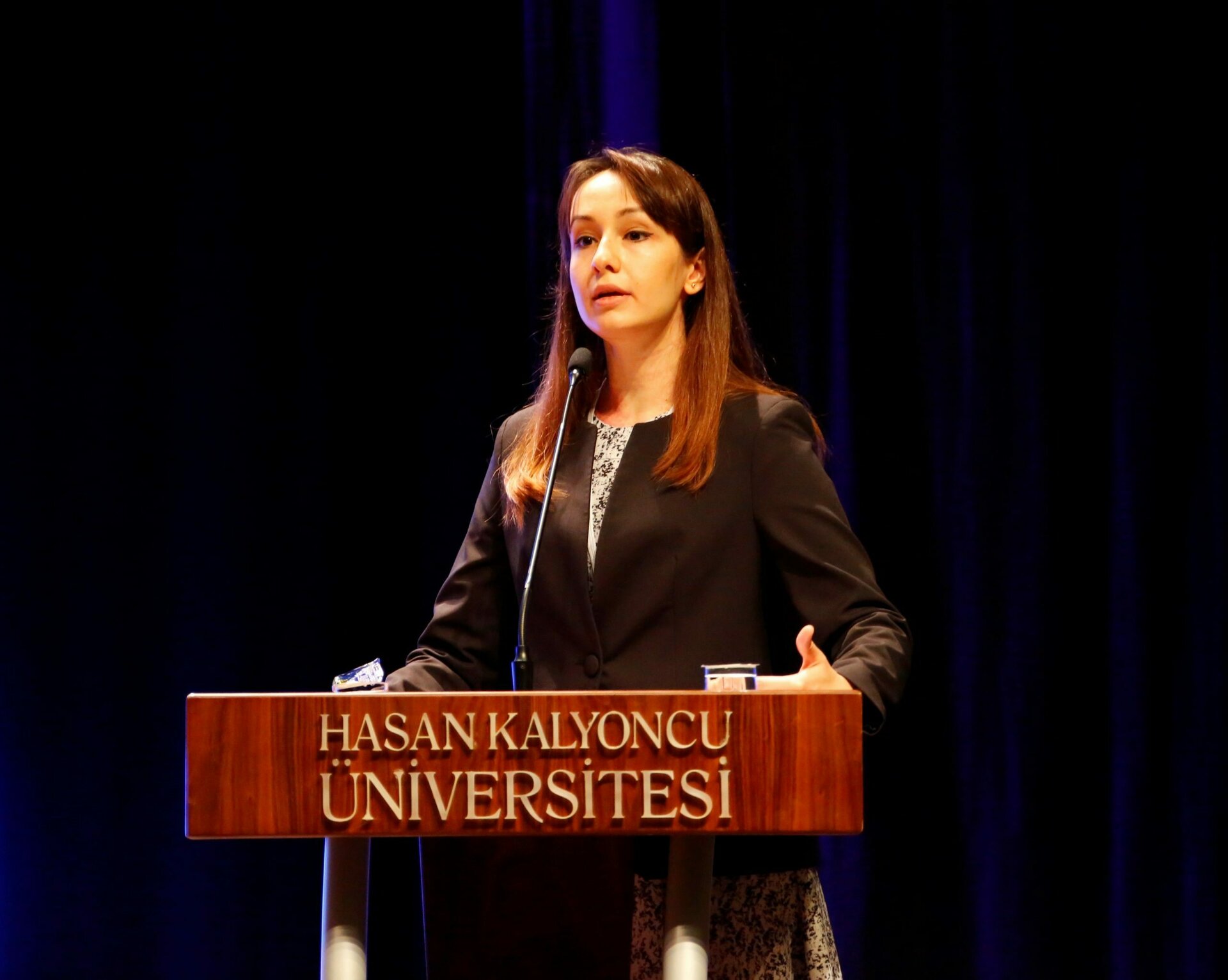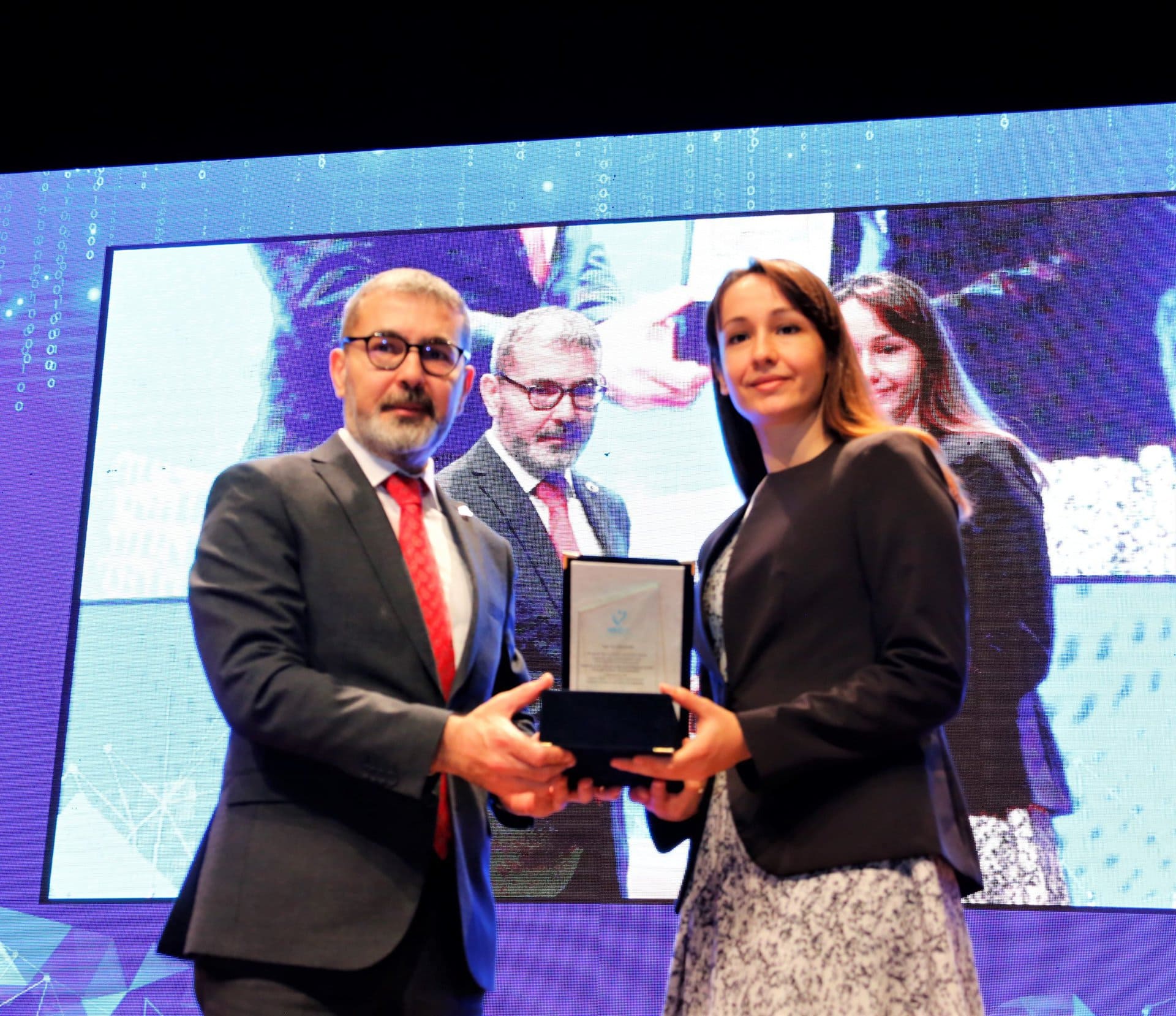
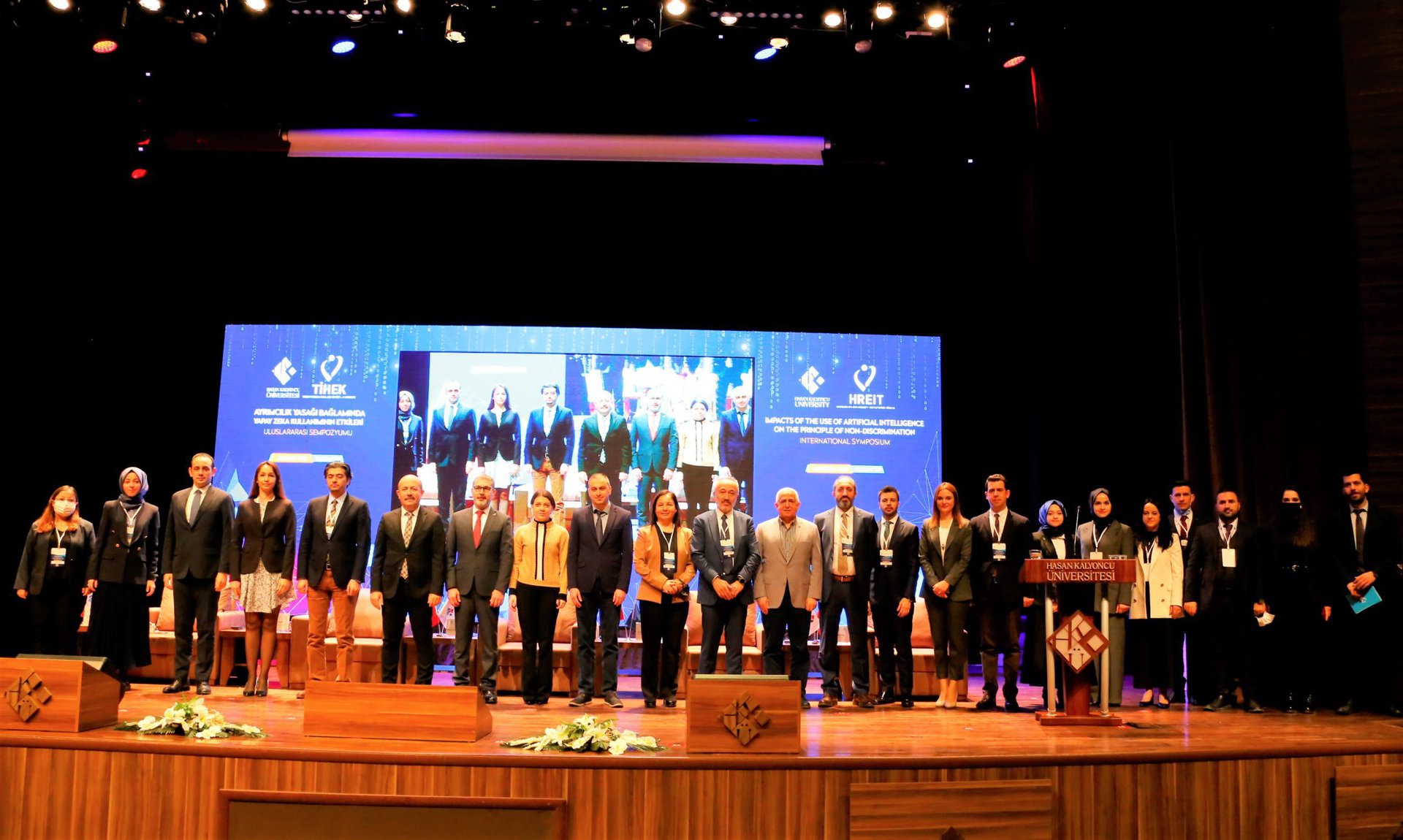
Held in cooperation with Hasan Kalyoncu University (HKU) and the Human Rights and Equality Institution of Türkiye (TİHEK), the “International Symposium on the Effects of the Use of Artificial Intelligence in the Context of the Prohibition of Discrimination” took place with strong attendance.
The symposium, in which 2 keynote speakers and 13 panellists took part in 3 different sessions on Algorithmic Discrimination and the Prohibition of Discrimination in the Age of Artificial Intelligence, the Evaluation of Artificial Intelligence Applications from the Perspective of Criminal Law, and the Evaluation of the Interaction of Law and Artificial Intelligence within Different Fields of Application, began with the opening speeches of HKU Rector Prof. Dr. Türkay Dereli and TİHEK Chairperson Prof. Dr. Muharrem Kılıç.
“WE HAVE AN ESTABLISHED AND VERY SUCCESSFUL FACULTY OF LAW”
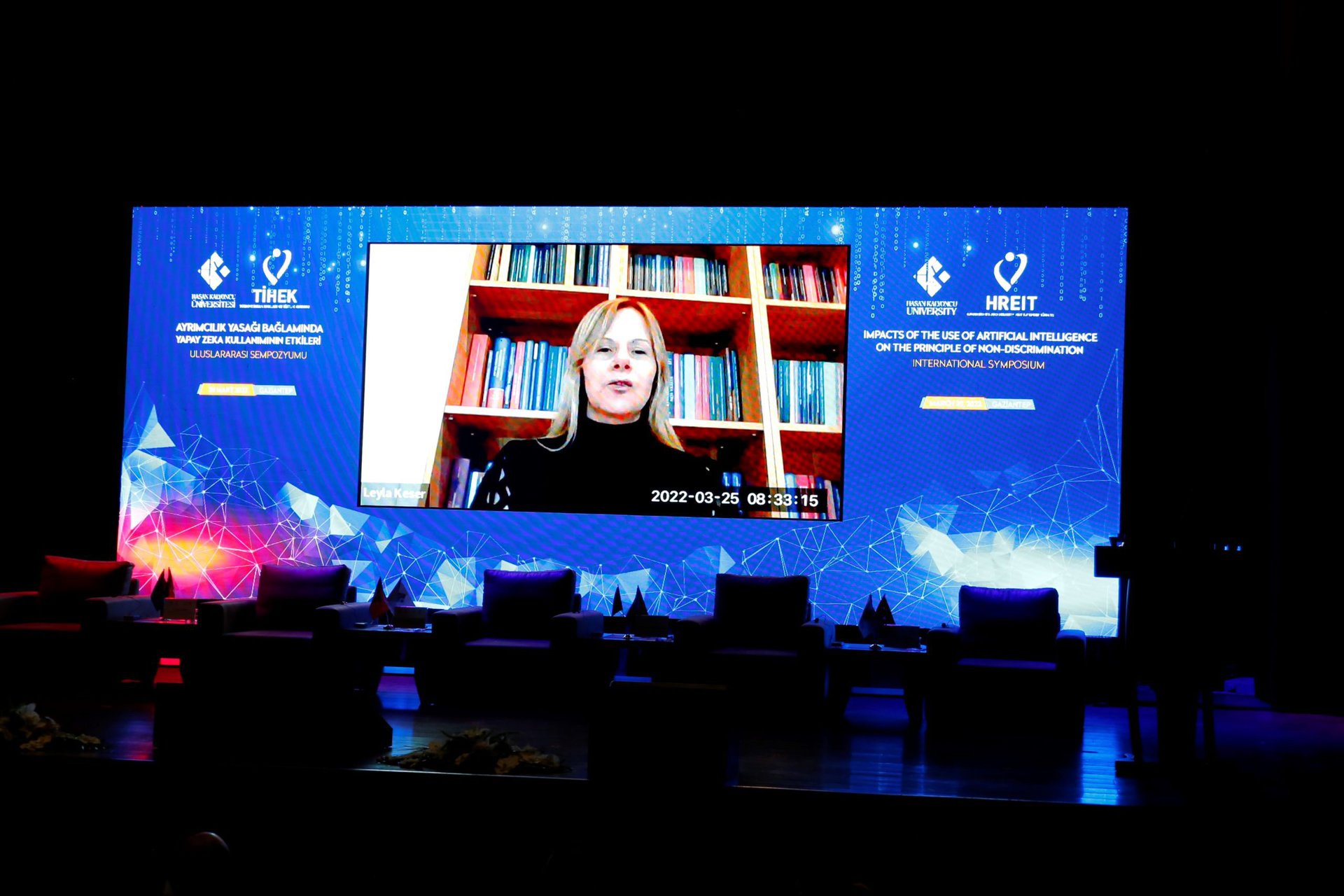
HKU Rector Prof. Dr. Türkay Dereli, who joined the opening of the International Symposium on the Effects of Artificial Intelligence Use in the Context of the Prohibition of Discrimination via a video message, said: “Exactly 3 months ago, the Chairperson of the Human Rights and Equality Institution of Türkiye, Prof. Dr. Muharrem Kılıç, visited our university and we signed a cooperation protocol. Within the scope of this protocol, our Faculty of Law students first founded the Human Rights Student Society. In this context, we updated the resources in our library on equality and human rights, and decided to organise an international conference together. We have an established and very successful faculty of law. Recently it has been striving to specialise in artificial intelligence and in the effects of artificial intelligence on the legal system. Finally, we decided to organise a conference addressing the discrimination risks that may arise from the use of artificial intelligence, which is rapidly spreading in human and social life, and the impact of artificial intelligence on legal systems, an issue raised in a report recently prepared by the Council of Europe. In a way, this conference makes it possible to question artificial intelligence itself, which is planned to be used intensively in the future to develop better and fairer systems, and to put its own fairness on the table. In this respect, I think our conference will attract great attention from the public. I wish this conference, which I believe will be of great benefit to our students and academic staff, a blessed and auspicious course,” thanking those who contributed to organising the conference.
“THE CENTURY WE LIVE IN IS THE AGE OF DIGITAL SURVEILLANCE”
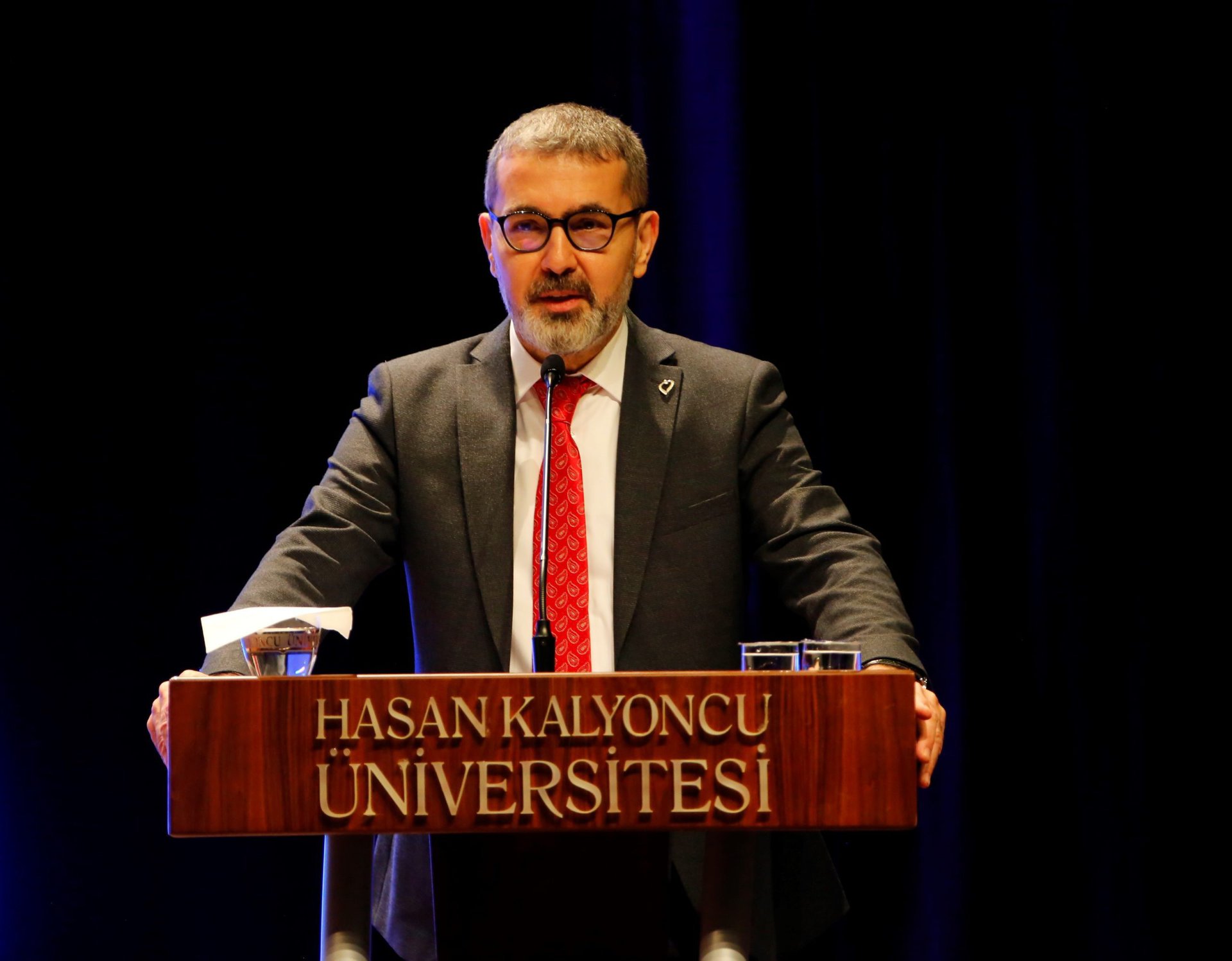
Speaking in the opening address of the symposium, TİHEK Chairperson Prof. Dr. Muharrem Kılıç thanked those who contributed to organising the symposium. Prof. Dr. Kılıç said that although engineering fields first come to mind regarding the effects of artificial intelligence use in the context of the prohibition of discrimination, the subject is related to many fields. Chairperson Prof. Dr. Muharrem Kılıç continued: “It has become possible for us to describe the century we live in as the age of digital surveillance. Within this framework, if we also include the opportunities created by this digitalisation and the possibilities of social media, we must say that we are in a network society. With a social media post that we make from where we sit, we can sometimes be a subject of rights and sometimes the perpetrator of a crime in that network society. We are in an age of interaction in which everyone can watch everyone.”
Stating that our age has turned into the age of big data, Prof. Dr. Kılıç said, “Now the person who owns the data becomes able to govern the whole world and the entire audience they address. Personal data matters. We also witness that this data can be used in ways that violate human dignity, rights and freedoms.”
Noting that smart court applications have begun in some countries, Prof. Dr. Kılıç said that cases such as e-commerce and intellectual property are heard only in smart courts in this context. Stating that smart or artificial intelligence courts create serious concerns and worries, particularly on a rights basis, Prof. Dr. Kılıç said, “A systematised and institutionalised machine bias, going beyond human prejudice, may emerge. This is because the machine constantly evaluates the same cases in the same way with the data it has received, and if there is a bias or ill intent in the algorithmic software, it can repeat it continuously. We also need to say that this may violate the presumption of innocence as well.”
Chairperson Prof. Dr. Muharrem Kılıç stressed that, for all these reasons, national human rights institutions should approach the issue with sensitivity and put it on their agendas.