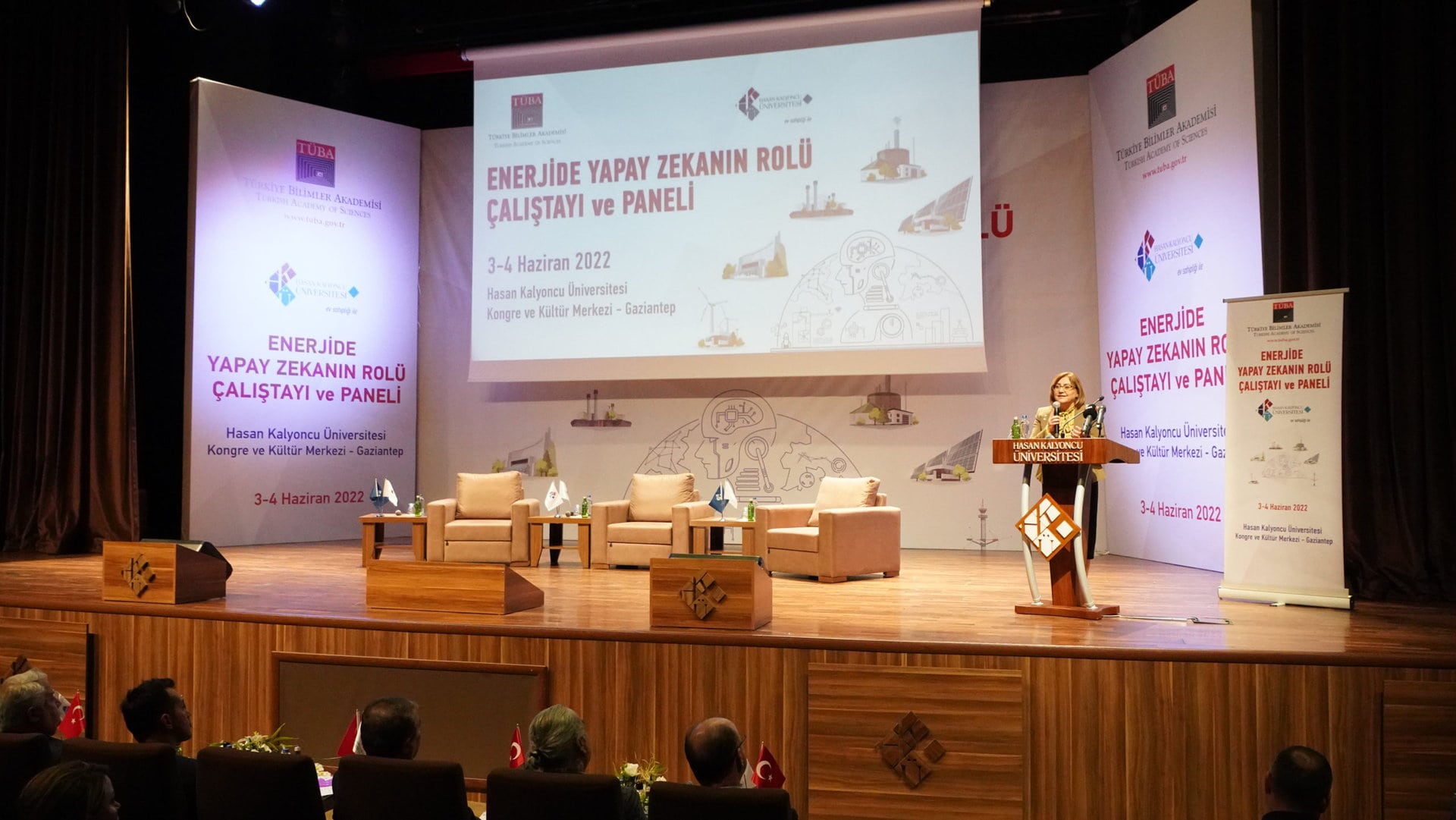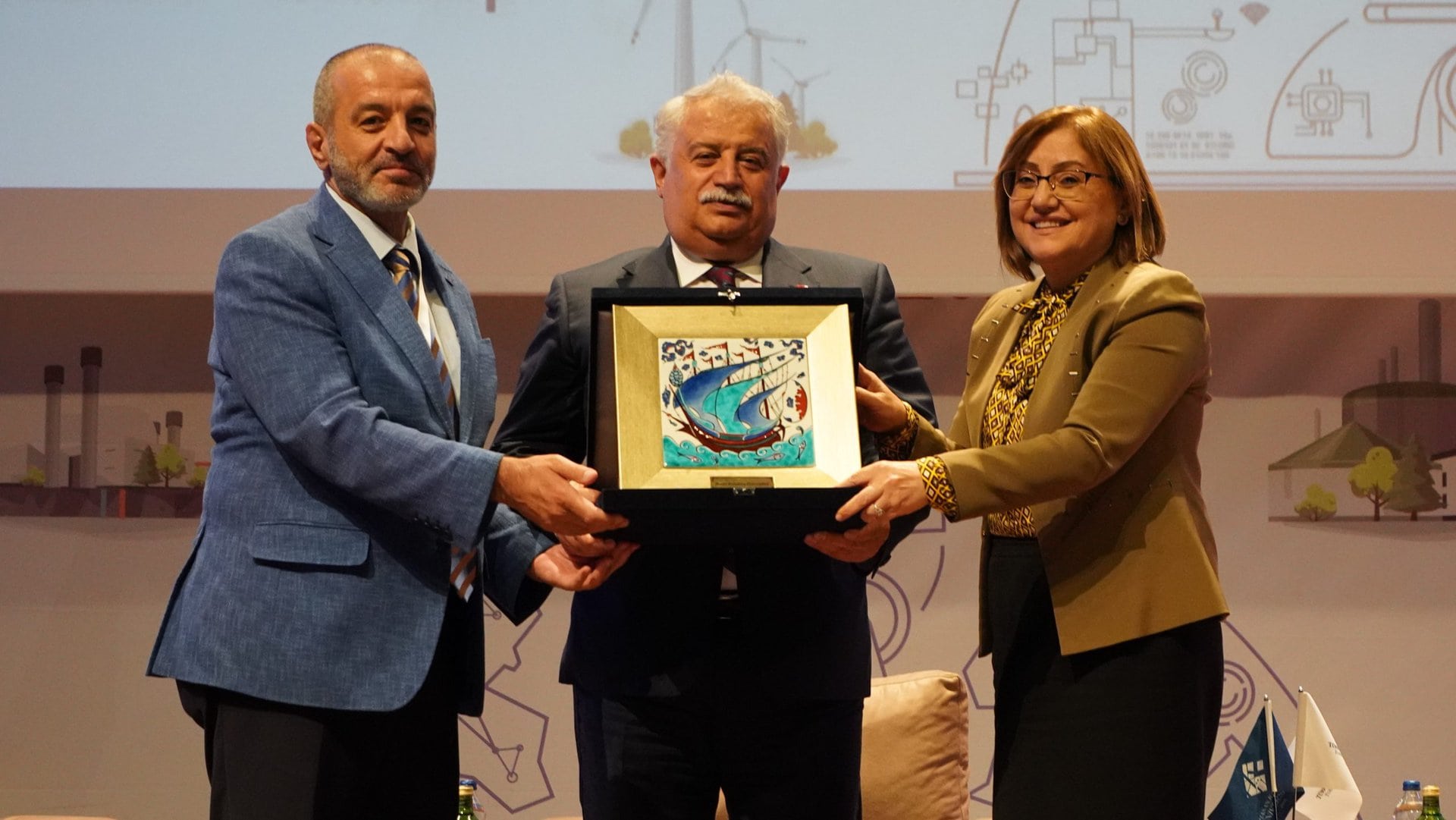
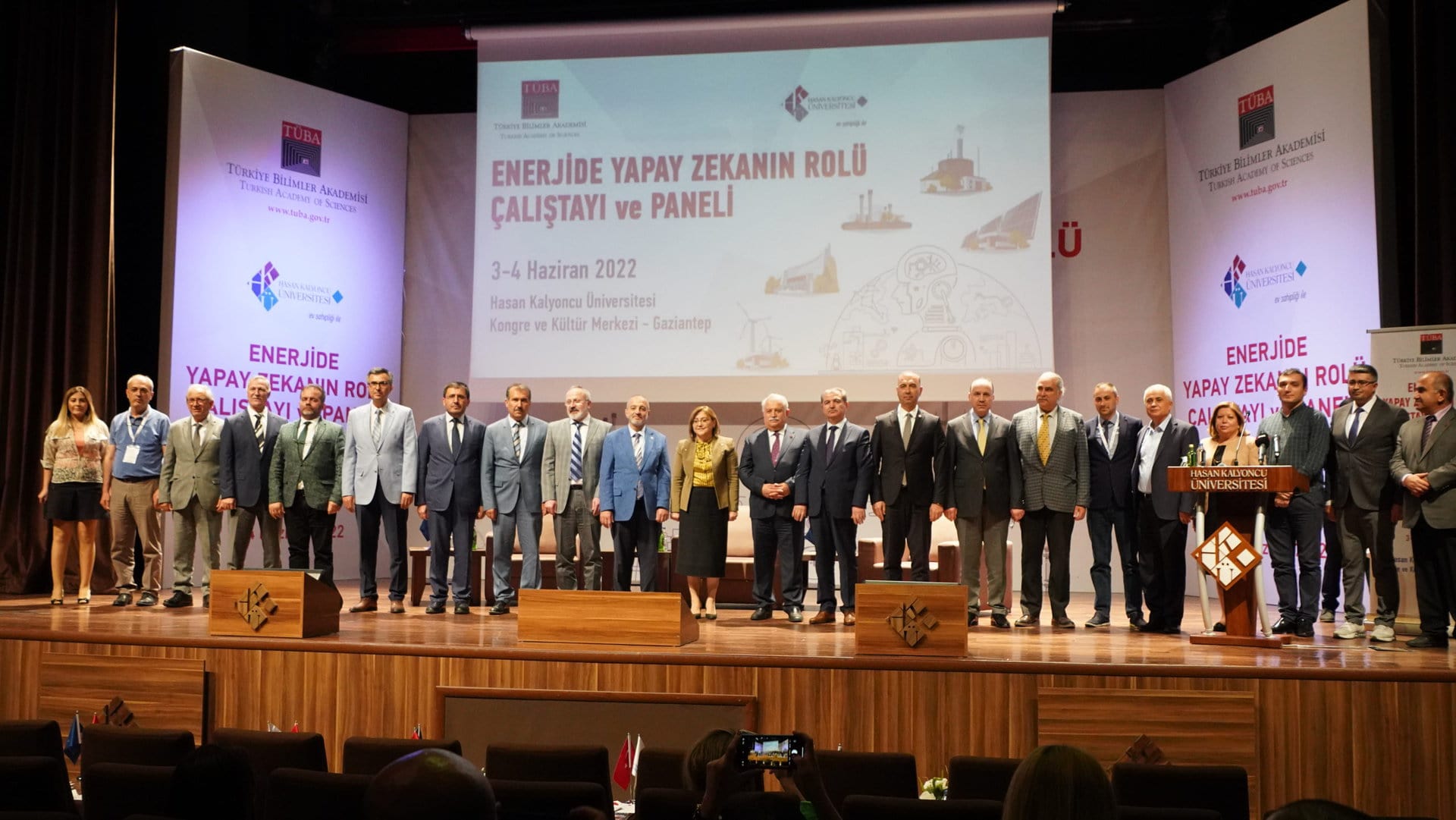
The “Workshop and Panel on the Role of Artificial Intelligence in Energy”, organised by the Energy Working Group of the Turkish Academy of Sciences (TÜBA) and hosted by Hasan Kalyoncu University, has begun at the HKU Congress and Culture Centre.
The TÜBA Energy Working Group aims to produce knowledge, advance science and technology, help shape policy, draw up roadmaps and propose solutions on the scientific and technological issues Türkiye needs in the field of energy. With this workshop, it is putting the topics of “energy and artificial intelligence” on the table. The event features academics conducting scientific studies on energy applications of artificial intelligence, as well as senior experts from the public and private sectors. The workshop is evaluating what needs to be done, and related recommendations, in determining Türkiye’s artificial intelligence policies with a focus on energy applications. A workshop report will be prepared in line with the solutions, roadmaps, ideas and recommendations that the relevant experts put forward from technological and scientific perspectives, and it will be presented for the benefit of the public.
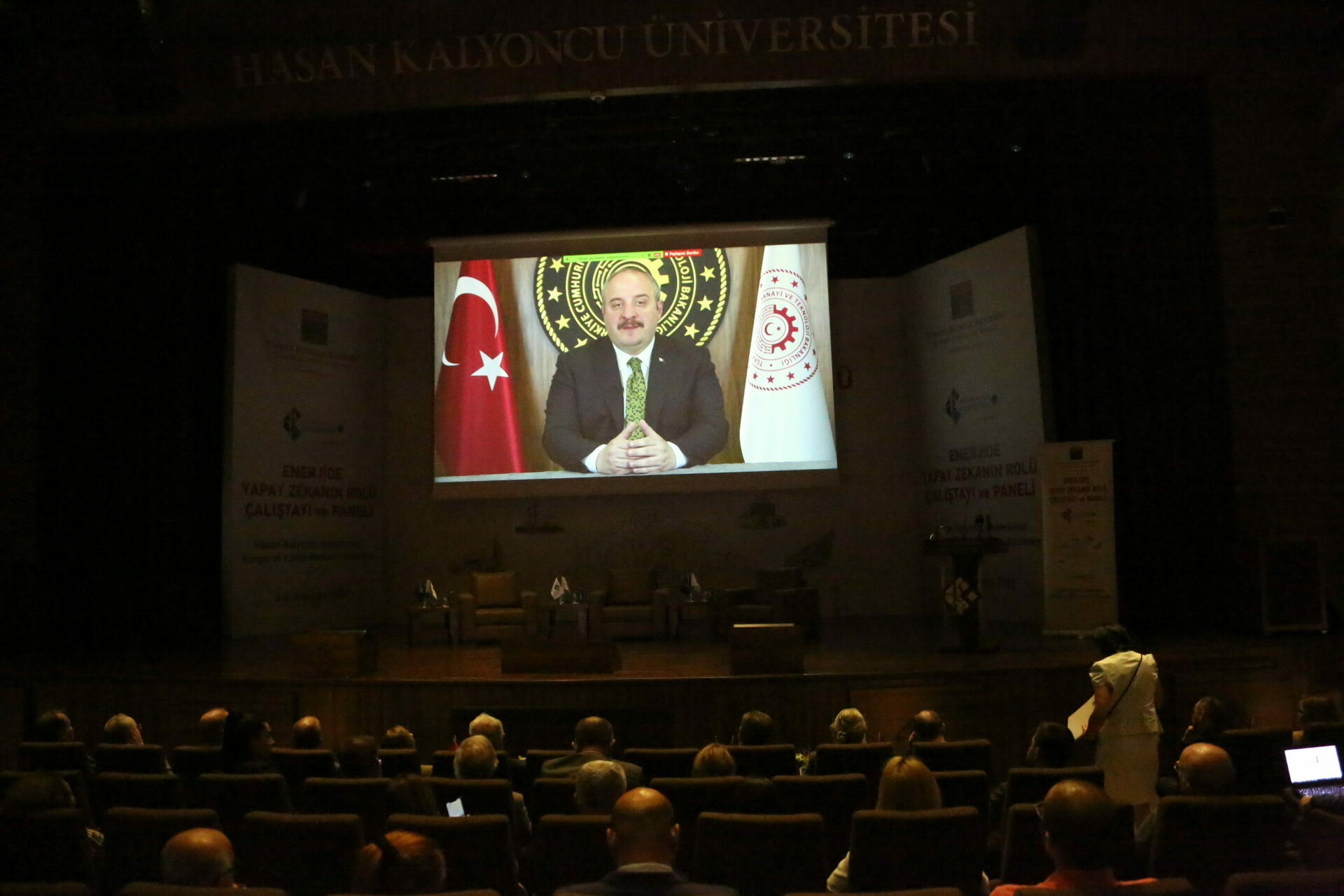
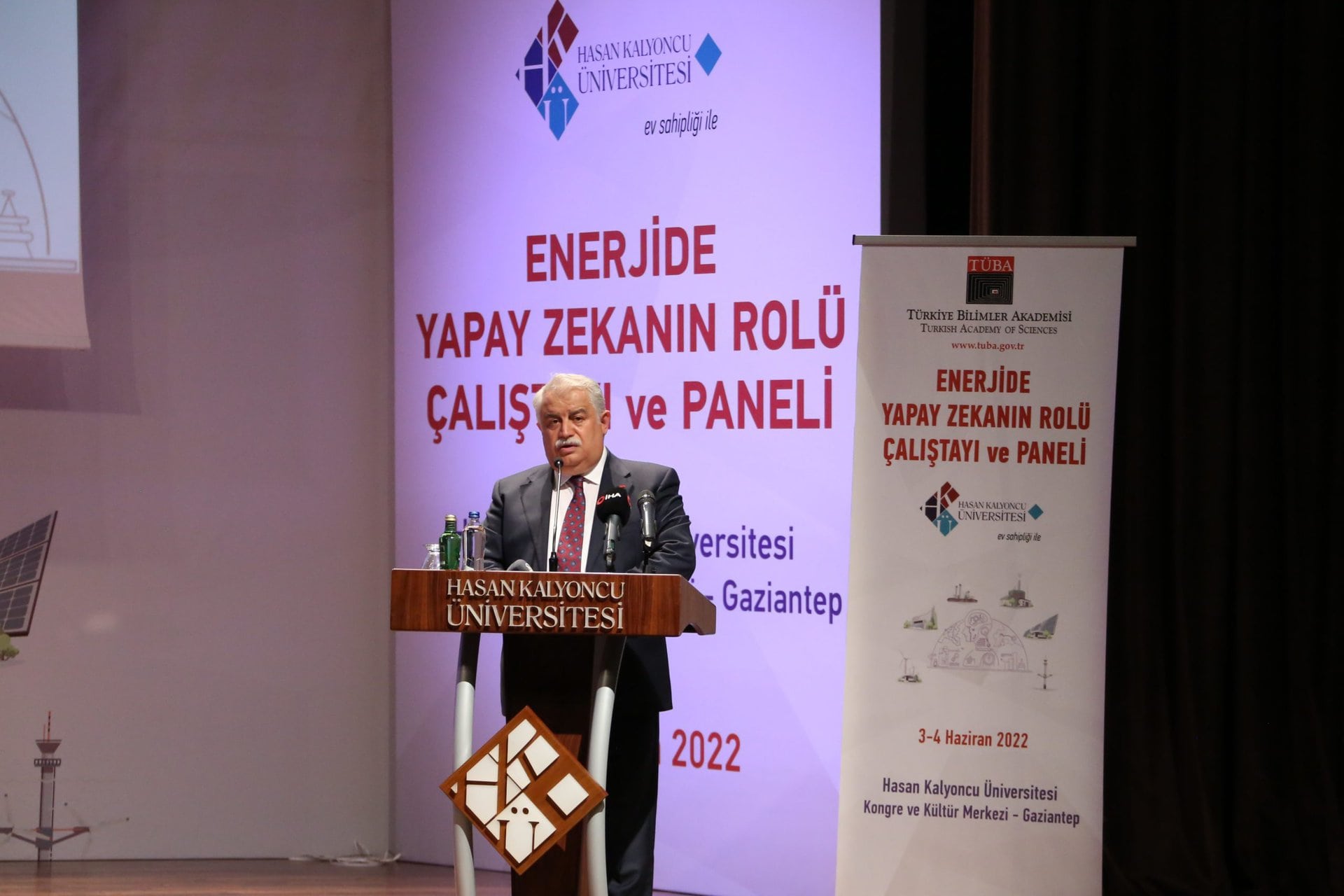
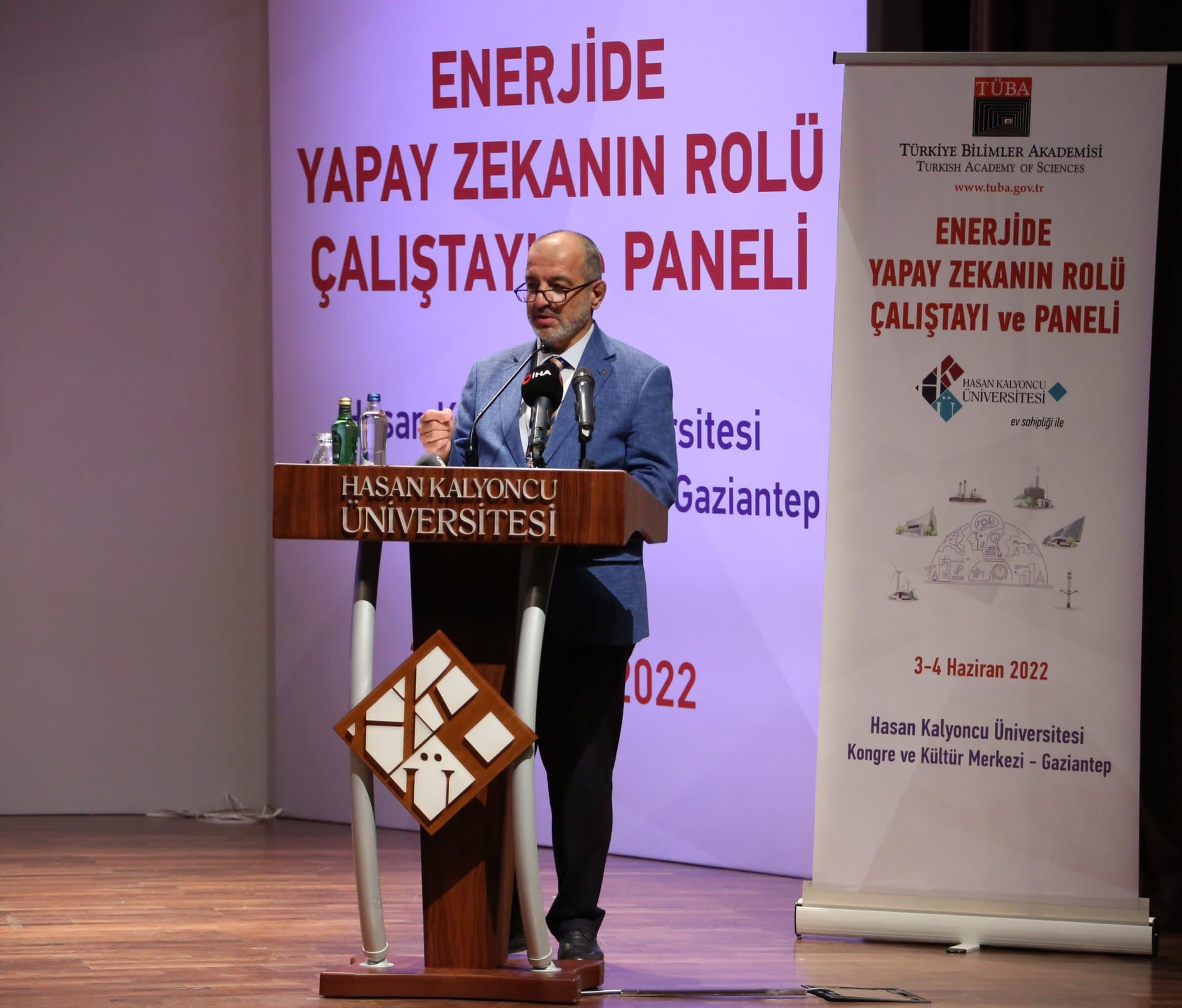
The workshop programme began with speeches by Minister of Industry and Technology Mustafa Varank, Deputy Governor of Gaziantep Mutlu Almalı, Mayor of Gaziantep Metropolitan Municipality Fatma Şahin, TÜBA President Prof. Dr. Muzaffer Şeker, HKU Rector Prof. Dr. Türkay Dereli and TÜBA Energy Working Group Coordinator Prof. Dr. İbrahim Dinçer.
“With the understanding of the national technology move, we regard artificial intelligence as a cornerstone in the production of critical technologies and shape our strategies accordingly”
- Underlining that the 21st century is a period in which artificial intelligence-driven systems are rebuilding human life, professions and institutions, Minister of Industry and Technology Mustafa Varank said that the whole world is witnessing change and transformation with digitalisation in many sectors, from industry to education and from health to energy, and stated: “At this pace, artificial intelligence spending is expected to double and exceed 100 billion dollars within the next 10 years, and the share of artificial intelligence in the global economy is therefore projected to rise to 14%, or 16 trillion dollars. At this point, with the understanding of the national technology move, we regard artificial intelligence as a cornerstone in the production of critical technologies and shape our strategies accordingly. In line with an approach based on generating added value from data, we have set out our national artificial intelligence strategy so as to include all our stakeholders, from the private sector to academia. Developing qualified human resources, building data and analysis infrastructures and spreading an R&D and innovation culture are among the leading areas we focus on in the strategy. With the policies we determine here, we will raise the contribution of artificial intelligence technologies to our national income to 5% and bring our country to the position of a technology producer.”
Noting that the energy needs of Türkiye’s growing economy are increasing with each passing day, Minister of Industry and Technology Mustafa Varank said: “In this direction, natural gas exploration activities continue in the Black Sea and the Eastern Mediterranean with drilling and seismic research vessels. Investments in renewable energy, from hydropower to geothermal, solar and wind, are continuing in order to reduce Türkiye’s dependence on foreign sources in the field of energy. As a result of investments and the support given to the private sector, the share of renewable energy has been raised from 38% to 54%.”
Minister of Industry and Technology Mustafa Varank also noted the following: “Increasing the benefit obtained from existing resources is as important as diversifying energy sources. This is only possible with R&D investments and technological developments. Artificial intelligence studies are also opening new horizons in the field of energy efficiency. Although artificial intelligence applications are becoming increasingly widespread in almost every field, it will take some time to predict their social and economic effects. Therefore, at the first stage, we believe that an ecosystem that experiments, explores, learns and constantly updates itself should be created. For this reason, scientific workshops and panels like this one, where the opportunities brought by artificial intelligence are discussed and all relevant stakeholders contribute, are very valuable for policy makers.”
TÜBA President Prof. Dr. Muzaffer Şeker began his speech by saying that, with the responsibility it carries, TÜBA carries out its duties through various programmes and projects as well as the working groups it has established. He said that the TÜBA Energy Working Group is one of these, and added: “Its mission is to produce knowledge by conducting studies on the scientific and technological issues Türkiye needs in the field of energy, to develop science and technology, to produce strategies and policies, and to draw up roadmaps and find solutions to problems. Within this framework, the vision of the working group is to build an effective and competent institutional structure that will contribute to our country’s energy independence, scientific and technological development, and the determination of strategic energy priorities. Türkiye’s priorities also determine the priorities of the working group. On these topics, we prepare reports at the conclusion of workshops, symposia and meetings and share them with the public and with the relevant institutions and organisations.”
“The importance of using artificial intelligence, one of the principal topics among emerging technologies, in a sound and strategic way in all fields is becoming more evident day by day”
TÜBA President Prof. Dr. Muzaffer Şeker continued his speech as follows: “With this vision, while emerging technologies are one of the main agenda items of our TÜBA Energy Working Group, the importance of organising a multidisciplinary and thematic scientific event on topics concerning our country’s energy use and future in this area has also grown. Artificial intelligence is a research field that aims to examine the mental functions related to intelligence in humans with the help of computer models, formalise them and then apply them to artificial systems. As the national academy of sciences of our country, I would like to say that we have had the opportunity to examine bibliometric analyses of scientific studies that address scientific artificial intelligence and energy topics at the same time. In this context, it can be said that the number of scientific studies on the axis of energy and artificial intelligence will steadily increase. ‘Optimisation’, ‘artificial neural networks’, ‘classification’, ‘consumption’ and ‘particle swarm optimisation’ are observed to be the most frequently studied topics in the field. On the other hand, in scientific publications on artificial intelligence and energy, Asian countries, led by China, stand out, followed by the USA and European countries. The importance of using artificial intelligence, one of the principal topics among emerging technologies, in a sound and strategic way in all fields is becoming more evident day by day. Thus, energy, informatics and strategy need to be considered simultaneously. At this point, roadmaps need to be drawn up meticulously.”
In light of all this information, Prof. Dr. Şeker underlined that, over two days, sessions will be held with online participation offered simultaneously with in-person attendance under the titles “Studies on Artificial Intelligence in Public Institutions”, “Fundamentals of Artificial Intelligence”, “Public and Private Sector Applications”, “Academic and Commercial Applications” and “Artificial Intelligence in Energy: Challenges and Opportunities”. He said: “As TÜBA, we will continue our work by focusing on emerging technology in all of our working groups. In this direction, we aim to prepare forward-looking prescriptions, strategic plans and roadmaps in energy policies and technologies together with scientists.”
“We meet 70% of our campus’s electricity needs with our domestic solar panels”
HKU Rector Prof. Dr. Türkay Dereli emphasised that, as a university, they are aware of their responsibilities in the processes of producing and effectively using the relevant technologies by carrying out R&D studies in the field of renewable energy along the axis of sustainability. He said: “In line with this vision and mission, we are very pleased to host TÜBA’s Workshop and Panel on the Role of Artificial Intelligence in Energy. We attach great importance to, and support, scientific studies in the fields of energy, renewable energy and artificial intelligence. We have strong collaboration opportunities within the ecosystem. In particular, we are conducting R&D studies on alternative energy generation and energy storage technologies. We also have projects that we carry out jointly with Kalyon Solar Technologies. One project is under way that focuses on the effective use of solar cells in street lighting elements and electric vehicle charging stations. Another project aims to create hybrid energy stations in which wind turbines and moving photovoltaic solar panels are used together. We meet 70% of our campus’s electricity needs with our domestic solar panels, which have an installed capacity of 2.3 MW. I would like to state that, in the ‘Greenest Universities’ ranking by Green Metrics, which evaluates the world’s universities in the areas of environmental awareness, energy use, waste recycling, transport management and sustainability, we rank third among foundation universities in Türkiye. I congratulate all our academics and researchers who take part in R&D projects in cooperation with industry and who made these rankings possible. I also thank everyone who contributed to the organisation and realisation of this workshop, especially our Vice Rector Prof. Dr. Mehmet Lütfi Yola, who is also a TÜBA GEBİP member.”
Following the opening, which also included a speech by Gaziantep Metropolitan Municipality Mayor Fatma Şahin, four sessions were held in the programme, with the first session chaired by TÜBA Member Prof. Dr. Erol Arcaklıoğlu. Director General of National Technology Zekeriya Çoştu spoke on “Energy Studies within the National Artificial Intelligence Strategy”, Head of the Planning and Supervision Department at the Ministry of Energy and Natural Resources Bilal Düzgün on “Digital Transformation in Energy Efficiency”, Technical Deputy Chair of the Nuclear Regulatory Authority Dr. Oğuz Can on “Artificial Intelligence Studies in the Energy Sector in the Public Sector”, and EPDK Digital Working Group Chair Dr. Okan Yardımcı on “Digital Transformation in the Energy Market and the Role of Artificial Intelligence”.