
The “20th National Psychology Students Congress,” hosted for the first time by Hasan Kalyoncu University, was held on 28-31 July 2015. Within the Congress, attended by 45 invited speakers from abroad and from Türkiye:
- Psychology as a Science
- Prof. Dr. M. Hakan Türkçapar (Head of the Department of Psychology, Hasan Kalyoncu University)
The word Science comes from the Latin root Scientia (knowledge). Science is the body of intellectual and practical activities that includes the systematic study of the structure and behaviour of the physical and natural universe through experiment and observation. Psychology, which lies between the natural sciences and the humanities, is the science of behavioural and mental processes (emotions, perceptions and cognitions).
- Cognitive Behavioural Theories in Substance Addiction
- Prof. Dr. M. Hakan Türkçapar (Head of the Department of Psychology, Hasan Kalyoncu University)
Substance addiction and alcohol abuse are encountered in ever-increasing proportions all over the world and in our country. In ICD-10, the disease classification system of the World Health Organization, substance addiction is defined by the following: a very strong desire or compulsion to take the substance; difficulty in controlling substance-taking behaviour; a physiological withdrawal syndrome when substance use is reduced or stopped, and using the same or a similar substance to relieve withdrawal symptoms; signs of tolerance, that is, needing higher doses of the substance in order to see effects that previously appeared at lower doses; the time spent obtaining the substance, using it and recovering from its effects increasing progressively so as to leave no room for other interests and pursuits; and continuing substance use despite clear evidence of harm caused by it.
- Intelligence and Brain Development in Adolescence: The Secret of Turmoil and Change
- Prof. Dr. Bengi Semerci (Faculty Member, Department of Psychology, Hasan Kalyoncu University)
Adolescence is a period of important brain, intelligence and cognitive development. During adolescence, the capacities to define problems differently, to comment on them, to perform difficult tasks and to think faster develop. Mental abilities increase rapidly from birth to the end of adolescence, level off from adulthood and begin to decline after middle age. The ability to perform mental activities becomes similar to that of adults from the beginning of adolescence. From this period on, abstract thinking begins. The solution to a problem is not limited to concrete ways. The adolescent finds the relationships among the variables in a problem. They form ideas not only about what is, but about what could be. They begin to retrieve stored information more quickly and functionally and to use what they have learned before in new situations. Social cognition also develops in adolescence. As well as understanding themselves, they begin to infer other people’s feelings and thoughts, their personalities, their goals and how they perceive the world. Because of these developments, the adolescent begins to evaluate and question social, political and religious systems.
- Avatar Children of the Cyber World
- Prof. Dr. Osman Tolga Arıcak (Faculty Member, Department of Psychology, Hasan Kalyoncu University)
This Conference explained why the age that began in the last quarter of the 20th century is defined as the internet age, and how the internet, as an information and communication technology, has affected human life. The general headings were:
Although it is not a basic human need, why has the internet become indispensable for people? How has the internet affected family life? How is the internet affecting the new generation psychologically?
- Attention Deficit Hyperactivity Disorder
- Prof. Dr. Mücahit Öztürk (Faculty Member, Department of Psychology, Hasan Kalyoncu University, Child and Adolescent Psychiatry Specialist)
Attention Deficit Hyperactivity Disorder (ADHD) is one of the most important psychiatric problems of childhood, with aspects that concern the individual first of all, as well as the family and society. When diagnosed early, the results obtained from treatment are quite encouraging. For this reason, ADHD is a disorder that must be known by all professionals who deal with children and by families, especially those working in health and education. ADHD consists of three core clusters of symptoms that can be classified as excessive activity, inattention and impulsivity. This clinical picture, which most of us today hear of as hyperactivity, was in fact first described in the early 1900s. However, many scientific studies conducted over the last 30 years have revealed that ADHD is a structural disorder of biological origin.
Some examples from the other Conferences within the Congress:
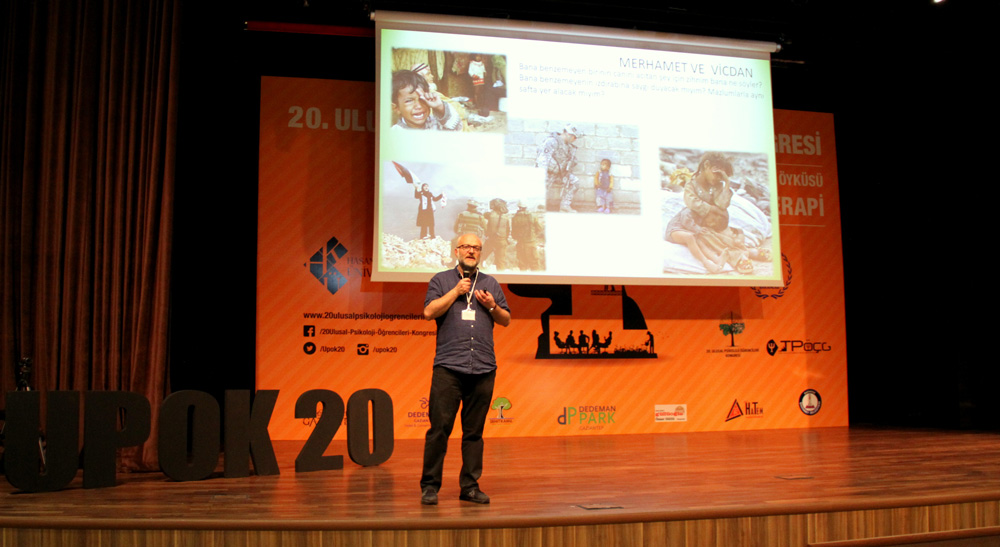
- Compassion (The Last Call for a Return to the Heart)
- Prof. Dr. Kemal Sayar (Head of the Department of Psychiatry, Marmara University Faculty of Medicine)
- Fundamentals of Cognitive Behavioural Therapy
- Satwant Sing, RN MSc (North East London NHS Foundation Trust, Türkiye, Wordsworth Health Centre)
- Questions and Answers on the Dilemma of Addiction and Freedom
- Prof. Dr. Kültegin Ögel (Acıbadem University)
- Cornern, Flavour, and Values: Beyond the Dodo’s Verdict
- Emeritus Prof. Dr. Digby Tantam (University of Sheffield)
- Athletic Performance and Sports Psychologists
- Prof. Dr. Bülent Bayraktar (Istanbul University, Istanbul Faculty of Medicine, Department of Sports Medicine)