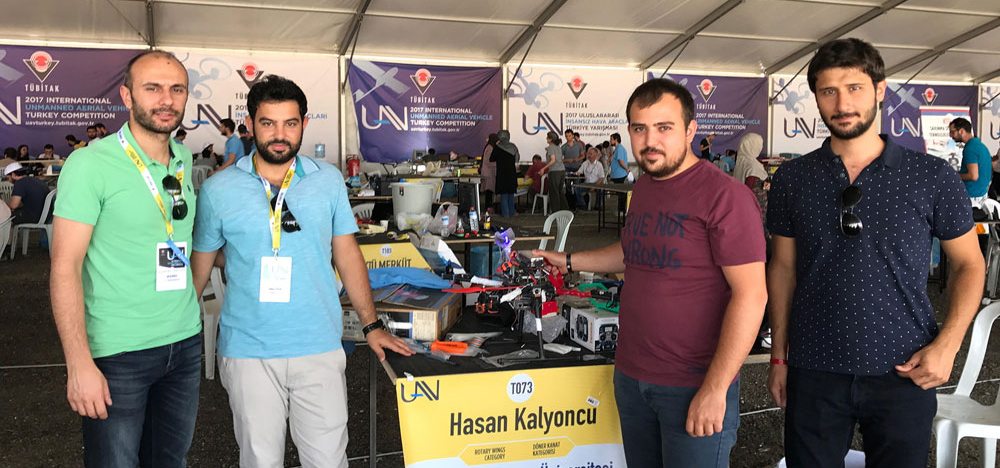
Organized every year by the Scientific and Technological Research Council of Türkiye (TÜBİTAK), the “International Unmanned Aerial Vehicle Competition” was held this year at the campus of TUSAŞ – Turkish Aerospace Industries Inc. (TAI) in Ankara.
206 TEAMS COMPETED
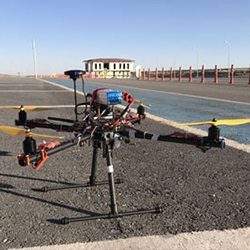
An autonomous drone named “KALİHA,” developed by Hasan Kalyoncu University (HKU) Computer Engineering and Electrical-Electronics Engineering students Bora Şahin, Yusuf Hamdemirci and Muhammet Yılmaz, advanced to the final among 206 teams and earned the right to compete. The UAVs developed by the teams competed to perform the tasks set by TÜBİTAK officials in the shortest time and with the greatest accuracy. The HKU students developed the hardware and software of the vehicle they named Kaliha, enabling it to move autonomously and return after completing its mission. While the tasks were being completed, the UAVs were controlled entirely autonomously, independent of humans. The participating vehicles were tested on their autonomous flight and image-processing capabilities and their payload-dropping abilities. The competition, which gave participants vision and knowledge in areas such as teamwork, division of labor, process planning and image-processing techniques, brought together young talents who can keep pace with the age of technology and production.
WHAT IS AN AUTONOMOUS DRONE?
A drone, known as an unmanned aerial vehicle (UAV), is a type of aircraft that can be remotely controlled. An autonomous drone, on the other hand, is an aerial vehicle that can take off by itself, move automatically along a set flight plan, and land on its own.
