
Psychology Agenda – 4
“ADDICTIONS”
The Psychology Agenda Continues to Be Set at HKU.
Addictions” Were Discussed at the HKU “Psychology Agenda – 4” Symposium “Addictions” were discussed.
Hasan Kalyoncu University (HKU) hosted the “Psychology Agenda-4 Symposium”. At the Symposium, attended by Psychologists, Psychological Counsellors and Guidance Teachers from Gaziantep and surrounding provinces, “Addictions” were discussed in all their details. The “Psychology Agenda-4 Symposium”, organised by the Hasan Kalyoncu University Department of Psychology, was attended by HKU Board of Trustees Advisor Ms. Songül Kalyoncu, HKU Rector Prof. Dr. Tamer Yılmaz, Ms. Ayşe Küçük, wife of the Governor of Şanlıurfa, HKU Rector’s Advisor Prof. Dr. Edibe Sözen, HKU Vice Rectors Prof. Dr. Zerrin Pelin and Prof. Dr. M. Hanifi Aslan, President of the Turkish Green Crescent Society Prof. Dr. M.İhsan Karaman, academics, and Psychologists, Psychological Counsellors and Guidance Teachers from Gaziantep and surrounding provinces.
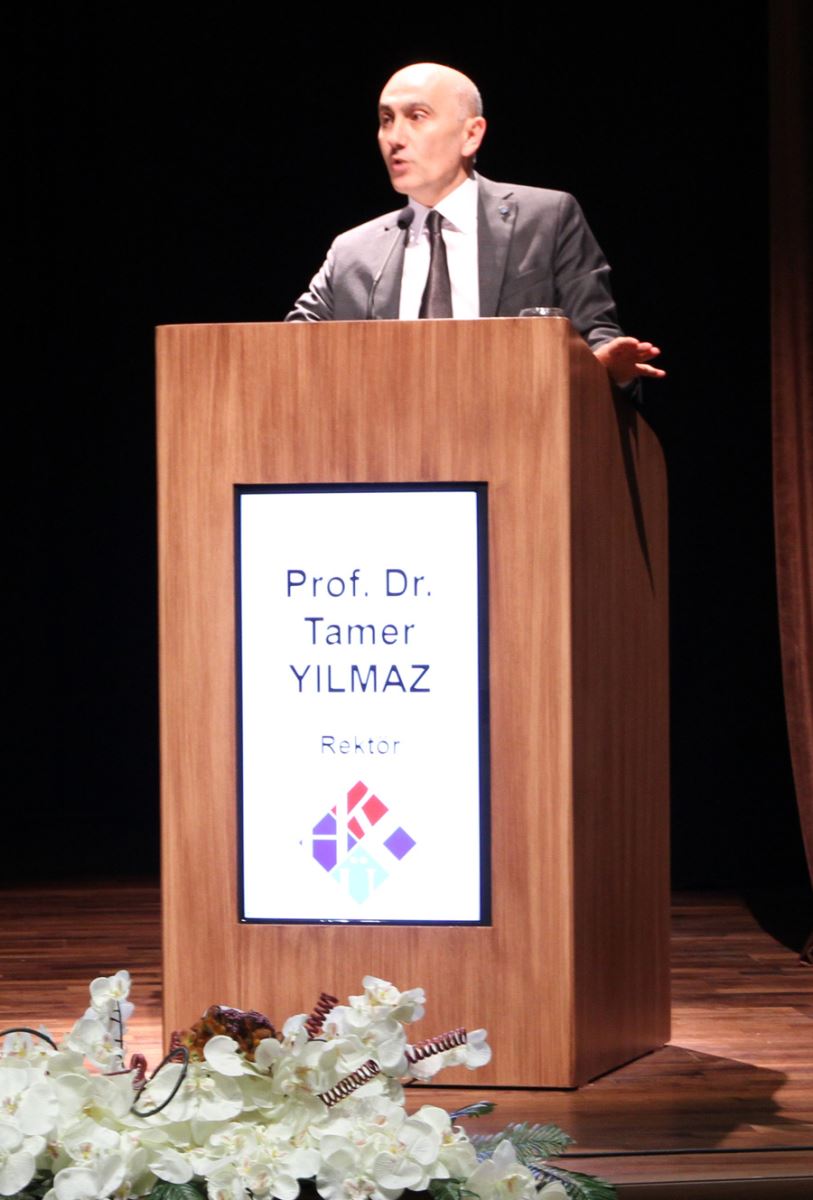
HKU Rector Prof. Dr. Tamer Yılmaz, who gave the opening speech of the Symposium, said, “Welcome, all of you, to the “Addiction” Symposium, with its diversity of participant profile, large number of participants and satisfying scientific content. As the HKU Department of Psychology, we have accomplished very important activities within 3 years. Today we are also hosting a very high-quality Symposium here. I extend my respect and love, hoping to see you again at the next meeting.”
“The Green Crescent and Its Struggle for Our Youth and Our Future”
Speaking at the Symposium, President of the Turkish Green Crescent Society Prof. Dr. M. İhsan Karaman said, “One of the most important conditions for preventing evil and addiction is to fight addiction, and the powers and centres that encourage addiction, with scientific methods. We know that the addiction industry reaches our people and our young people through different ways that change and develop every day, both illegal and legal, and that it aims to reach them even more intensively. We see that it is becoming increasingly difficult to prevent these with familiar slogans and methods. For this reason, subjecting both the ways in which problems emerge and spread and the way of combating them to serious scientific study; following these scientific data and sharing them with the public and officials; and examining the ways and means of the struggle against addiction through national and international scientific meetings and researching the possibilities of implementation will be among the most important activities of the new period. To this end, we are carrying out effective activities by taking preventive measures in the fields of tobacco, alcohol, drug and technology addiction and doing awareness-raising work for our people and especially for our young people.”
“Addiction and Children: Risk Factors”
Speaking at the Symposium, Hasan Kalyoncu University Department of Psychology faculty member Prof. Dr. Mücahit Öztürk took up the topic “Addiction and Children: Risk Factors”. Mr Öztürk said, “Alcohol and drugs are used quite frequently because of the changes they make in emotion, perception and behaviour, and are popular especially among young people. From ancient times to the present, alcohol and similar substances have been used as pleasure-giving, stimulant, sedative or narcotic agents. Although there have been great changes over time in the variety of these pleasure-giving substances, and synthetic products have replaced natural substances with the development of the pharmaceutical industry, the purposes for which these substances are used have hardly changed at all, and their abuse and the addictions they cause have constantly been a problem. Social prohibitions that do not target the individual have also not been effective alone in preventing the use of these substances. In large-scale screening studies on young people in Western countries and the USA, it has been observed that the rates of alcohol and substance use are truly at frightening levels and that the age of starting these substances is steadily falling. Although it is difficult to give an exact rate for our country, the limited research and clinical observations carried out do not present a cheerful picture at all in terms of alcohol and drug use. In our country, too, as in Western societies, this rate is gradually increasing among the young population. The greatest duty in reducing alcohol and drug use falls primarily on families and educators. We can only help our young people, who are at risk at every moment from childhood, by being closer to them. For this reason, the relationship we establish in an understanding, affectionate and friendly manner is of great importance. There are certain risk factors that pave the way for alcohol and drug addiction; we can examine them under two main headings, genetic and environmental factors.”
“Gaziantep Metropolitan Municipality Child and Adolescent Treatment and Rehabilitation Model”
Dr. Cenk Yancar, Manager of the Oya Bahadır Yüksel Rehabilitation Centre, said, “In recent years, the rapid growth of industry, migration and population increase in the province of Gaziantep have brought economic and social problems with them. This situation affects families, especially young people and children, and brings with it increasing substance use and the problem of children living and working on the streets. In our province, which has no AMATEM, according to the TUBIM 2013 report, when the places of residence of inpatients are examined, Gaziantep ranks 5th, and in direct substance-related deaths Gaziantep ranks 4th. It is estimated that approximately 1000 children and adolescents work or live on the streets in our province. To solve the problems of substance use among children and adolescents living and working on the streets, our municipality provides services with 3 centres: the Münir Onat Children and Youth Centre, the Akınal Children-Youth and Family Centre and the Oya Bahadır Yüksel Children and Youth Centre. The Metropolitan Municipality’s work on this subject goes back to 1997. Children identified during street work, brought by families or sent by other official institutions are first put through an assessment and are admitted to the appropriate centre or referred to an outpatient treatment programme.”
“Addiction and Psychological Counselling Services at School”
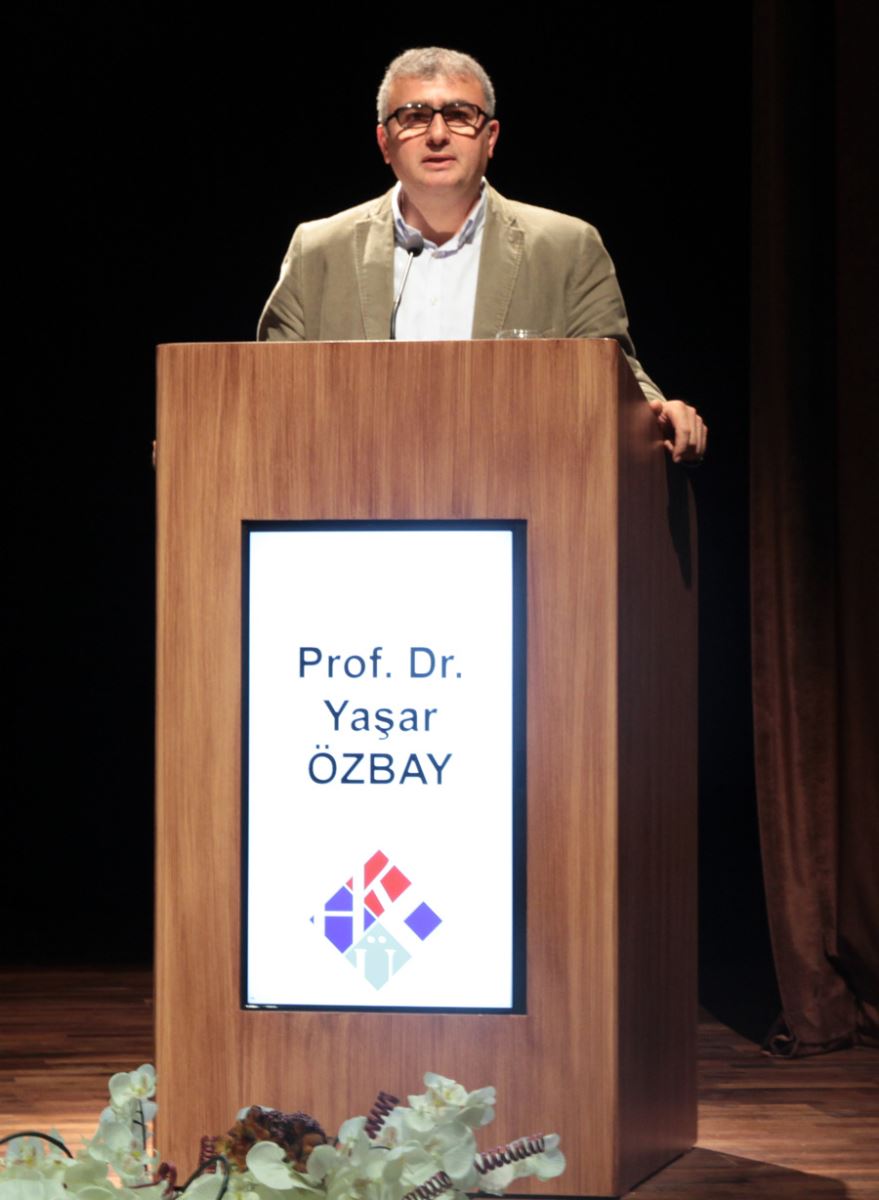
Prof. Dr. Yaşar Özbay, faculty member of the Hasan Kalyoncu University Faculty of Education, said, “Addiction is the state of seeing something, someone or certain situations as an indispensable part of one’s self and being unable to do without or be without it. We need to consider it a situation that poses a great risk especially for children and young people. Looking at it in terms of being a problem, it appears as an important situation concerning school, society and family alike, one in which intervention and preventive work are especially necessary. Addiction has recently come to the agenda more with Bonzai. We see that virtual and technological addictions, which concern all of us closely, and, as a result of our communication and meetings with families, technological addictions such as Internet, TV and mobile phone addiction are among the foremost problems that families put forward regarding our children.”
“Prevention and Intervention Approaches in Substance Addiction”
Asst. Prof. Dr. Itır Tarı Cömert, faculty member of the Hasan Kalyoncu University Department of Psychology, said: When working with substance addiction, the functional use of prevention and intervention programmes is necessary as a public health approach. The aim of prevention and intervention activities is to prevent the use of addictive substances, to prevent the development of addiction in society, to prevent the individual and social problems created by addictive substances, and to ensure the development of healthy behaviours in society. There are three types of prevention methods: primary prevention, secondary prevention and tertiary prevention. Prevention activities are important because addiction is a disease that is quite difficult to treat once it has developed. In this respect, engaging in preventive activities is an easier way than intervening in addiction.”
“Cognitive Behavioural Approach in Substance Addiction”
Hasan Kalyoncu University Head of the Department of Psychology Prof. Dr. M. Hakan Türkçapar said, “Substance addiction and alcohol abuse are encountered in increasing proportions all over the world and in our country. In particular, the existence of alcohol addiction and related problems was described even in very ancient periods of history. Historical records show that nations living in Anatolia, Mesopotamia, Egypt and other Mediterranean regions used alcohol. Throughout history, starting from Hippocrates, many physicians have spoken of the harmful effects of alcoholic drinks on human health. However, the handling of alcohol use disorders as a medical problem, breaking away from moral explanations, dates back only the last 150 years. In 1969 the World Health Organization defined alcohol addiction as “the use of alcohol by a person to the extent that it exceeds the limits of their own culture or damages their own health and social relationships”. The “Cognitive-Behavioural Theory” in addition emphasises the vulnerability model. That is, addiction disorder is thought to develop in people who have risk factors, such as stressful or critical periods in the life cycle, or who have certain difficulties. To put it another way, “stress can reveal or activate a particular vulnerability”. In many people who take an addictive substance, especially when taken together with someone else, a feeling of well-being or satisfaction is observed. Others may learn that this particular substance reduces pain, anxiety, fatigue and feeling bad. As a result, substance use has strong primary and secondary reinforcing properties,” he said. The fourth of the Symposium series, in which many topics were discussed, ended with the presentation of certificates of attendance.