
Psychology Agenda-3
“Attention Deficit Hyperactivity Disorder”
“What Should We Know? What Should We Do?”
THE PSYCHOLOGY AGENDA CONTINUES TO BE SET AT HKU.
HKU’S “PSYCHOLOGY AGENDA 3” SYMPOSIUM ADDRESSED “ATTENTION DEFICIT HYPERACTIVITY DISORDER”: “WHAT SHOULD WE KNOW? WHAT SHOULD WE DO?”
Hasan Kalyoncu University (HKU) hosted the “Psychology Agenda 3” Symposium. At the symposium, attended by psychologists, psychological counselors and guidance teachers from Gaziantep and surrounding provinces, “Attention Deficit Hyperactivity Disorder” was discussed in full detail.
The “Psychology Agenda 3” Symposium, organized by the Hasan Kalyoncu University Department of Psychology, was attended by Şahinbey District Governor Mr. Uğur Turan, Board of Trustees Member Dr. Songül Kalyoncu, HKU Rector Prof. Dr. Tamer Yılmaz, HKU Vice Rectors Prof. Dr. Zerrin Pelin and Prof. Dr. M. Hanifi Aslan, academics, and psychologists, psychological counselors and guidance teachers from Gaziantep and surrounding provinces.
In his opening speech at the symposium, HKU Rector Prof. Dr. Tamer Yılmaz said: “With the diversity of its participant profile, the large number of attendees and its rich scientific content, this event themed ‘Attention Deficit Hyperactivity Disorder’ has brought a breath of fresh air to our city. Hyperactivity, which we have become used to hearing about everywhere in recent years, is unfortunately one of the most common psychological problems of the modern age. Although we are accustomed to hearing of it as a psychological disorder experienced mostly by children, hyperactivity is a serious and frequently seen psychological disorder. I extend my respect and affection until we meet again at the next gathering.”
“What Is ADHD? How Is It Recognized?“
Speaking at the symposium, Prof. Dr. Mücahit Öztürk said: “Attention Deficit Hyperactivity Disorder (ADHD) is one of the most important psychiatric problems of childhood, in the aspects that concern the individual first of all, as well as the family and society. Because the results of treatment are encouraging when it is diagnosed early, ADHD must be known by everyone who works with children, especially those working in health and education, and by families. ADHD consists of three core clusters of symptoms that can be classified as excessive activity, inattention and impulsivity. This clinical picture, which most of us hear about today as hyperactivity, was in fact first described in the early 1900s. However, numerous scientific studies conducted over the last 30 years have revealed that the causes of ADHD are a structural disorder of biological origin. ADHD has 3 core symptoms. These are excessive activity (hyperactivity), inattention and impulsivity.”
Addressing misinformation and misconceptions about ADHD, Prof. Öztürk continued: “ADHD is not a disease of the modern age. Treating the behaviour of a child with ADHD as normal and saying ‘he is a child, he will do that, it will get better in time’ is like gambling with the child. The family is not to blame for ADHD. ADHD is a disorder with a biological basis. Therefore, ADHD is not a problem of being unable to discipline a child. The medications used in the treatment of ADHD are not addictive. They have no permanent physical side effects. The diagnosis of ADHD must be made by a child psychiatrist. Although few in number, there are some who apply alternative methods that may attract the attention of families, apart from the scientific treatment of ADHD. Families should not trust these non-scientific methods (for example, music therapy, computer-based treatment, biofeedback, diet therapy, multivitamin supplements, etc.).”
“Living with Someone with ADHD in Childhood: What Should Families, Teachers and Spouses Do?“
Prof. Dr. Bengi Semerci, who also spoke at the symposium, addressed the topic of “Recommendations for Teachers, Families and Adults.” Prof. Semerci said: “The setting in which excessive activity and distractibility are most evident is the classroom. For this reason, teachers are an important part of treatment, and it is difficult to succeed without their cooperation. For a teacher to be successful, they first need to have sufficient knowledge about ADHD. The teacher’s most important duty is to find and support the areas in which the child, whose self-esteem and confidence are declining, is successful, and to restore them. Having a child diagnosed with ADHD makes life harder for the family and the child. Being a parent cannot be explained simply by having a child. The most important thing you must know and believe is that your child has a problem. This problem is not your fault. Living with a spouse who is constantly absent-minded, does not listen carefully, is angry, reactive, does not do their own tasks, forgets, has no sense of time and is extremely disorganized is difficult. Explaining the problem to family, spouse and even colleagues makes it possible for them to support the person with ADHD in making the necessary arrangements. In addition, positive feedback reinforces behaviours. Being able to control the symptoms and improvements will positively affect work performance and relationships with spouse, family and friends. Adult education and supportive treatment enable an adult with ADHD to control the problem and improve their quality of life.”
“Cognitive Behavioural Treatment of ADHD”
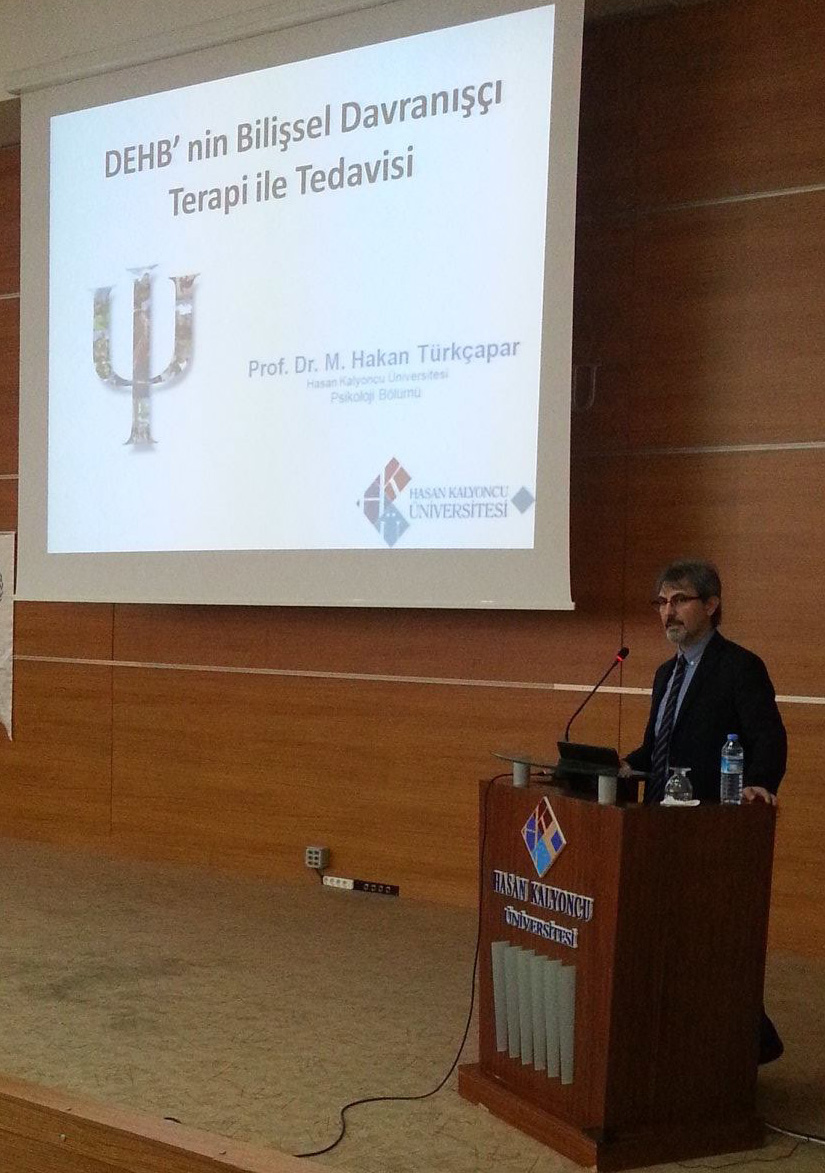 Prof. Dr. M. Hakan Türkçapar said: “In cognitive behavioural psychotherapy for ADHD, behaviour management forms the most important part. The basis of behavioural therapy is to motivate the child to show appropriate behaviours. A positive parent-child relationship, and positive-outcome behaviours such as priority and rewards, are two important components of this. Individuals with ADHD experience ongoing inner restlessness and impulsivity. In some adult cases, medication alone may be sufficient at the level of symptom treatment. In other cases, while it contributes to relief of symptoms, a positive functional outcome cannot always be achieved. Combined treatments are needed to achieve long-term results in adult ADHD treatment. Among psychosocial treatments, as mentioned earlier, cognitive-behavioural therapies (CBT) stand out in adults as they do in children. The goals of CBT are to increase the use of coping strategies, change maladaptive cognitions, reduce the emotional, mood and anxiety disorders that can accompany ADHD, and address the decline in self-esteem. Setting realistic expectations and clear goals is important in the content of CBT.”
The symposium, the third in the series, which addressed the topics “What Is ADHD? How Is It Recognized?”, “Living with Someone with ADHD in Childhood: What Should Families, Teachers and Spouses Do?” and “Cognitive Behavioural Treatment of ADHD”, concluded with the presentation of certificates of attendance.