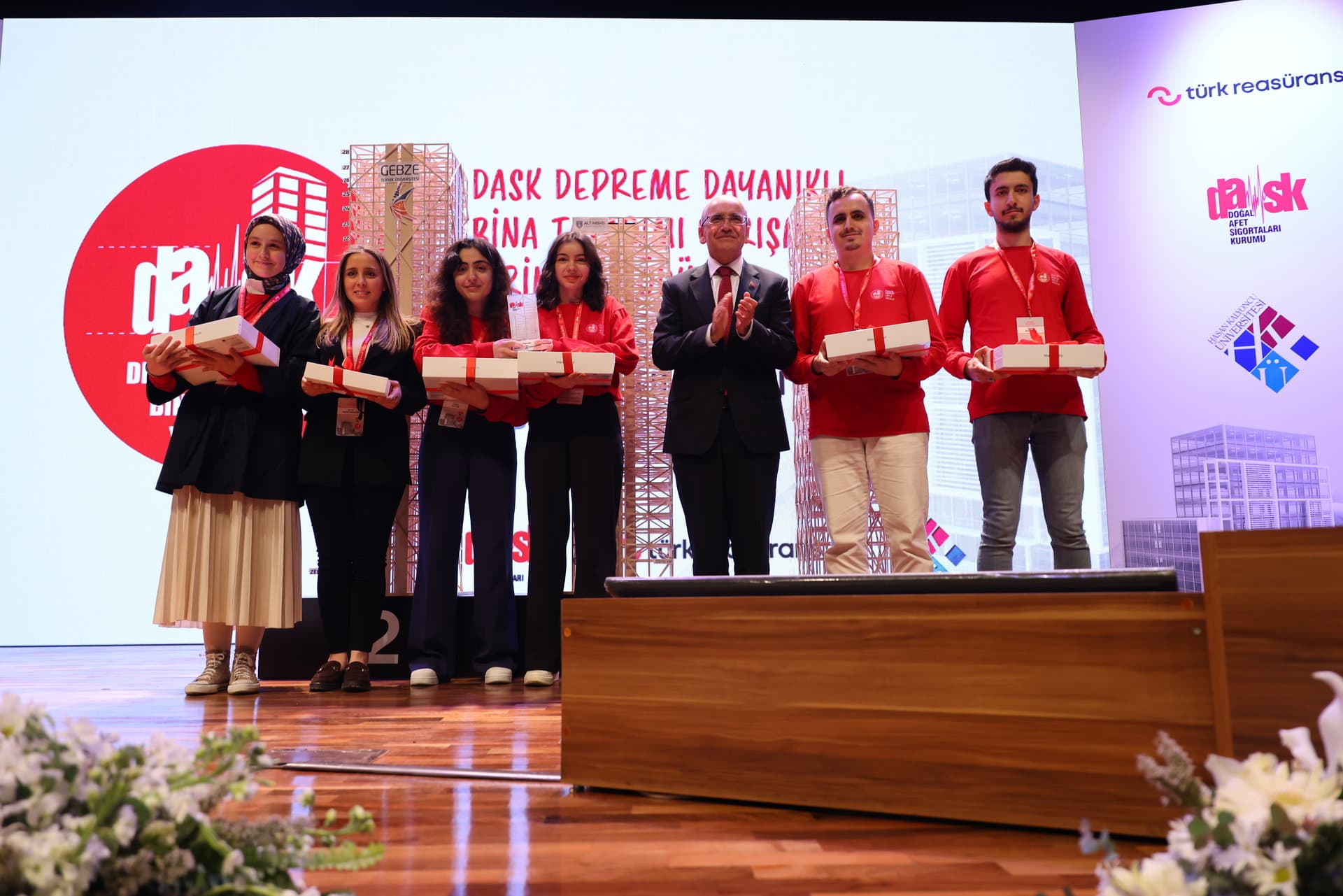
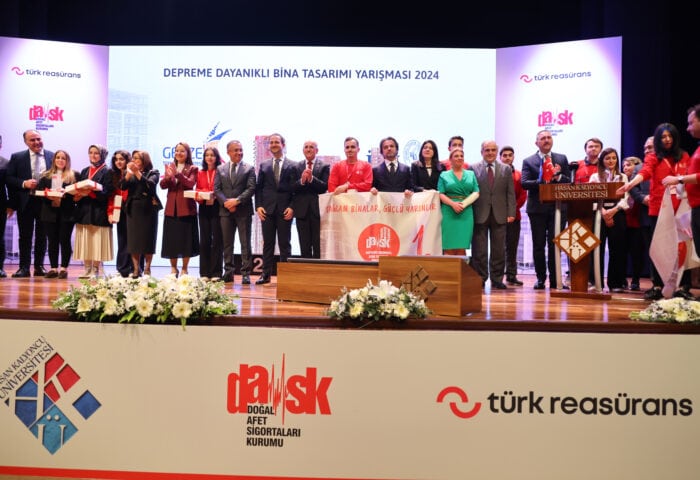

The awards for the 7th Earthquake Resistant Building Design Competition (DASK), aiming to educate future architects and civil engineers with earthquake awareness, were presented for the 7th time. The award ceremony, hosted by Hasan Kalyoncu University with the participation of Treasury and Finance Minister Mehmet Şimşek and Haluk Kalyoncu, Deputy Chairman of the Board of Trustees of Hasan Kalyoncu University, saw Altınbaş University winning the first prize, receiving the award plaque from Treasury and Finance Minister Mehmet Şimşek. Gebze Technical University secured the second place, while Istanbul Technical University was awarded the third place.
Alongside the Turkish Reinsurance Special Award, six more special awards were granted during the ceremony. Hacettepe University received the Best Architectural Special Award, Altınbaş University received the Best Earthquake Performance Special Award, Adana Alparslan Türkeş Science and Technology University received the Turkish Reinsurance Special Award, Erzurum Technical University was awarded the Best Communication Skills and Presentation Special Award, Sakarya University received the Best Use of Social Media Team Award, and Yıldız Technical University won the Spirit of the Competition Award, determined by the votes of the competition participants. Additionally, MEF University won the Most Creative Project Name Award.
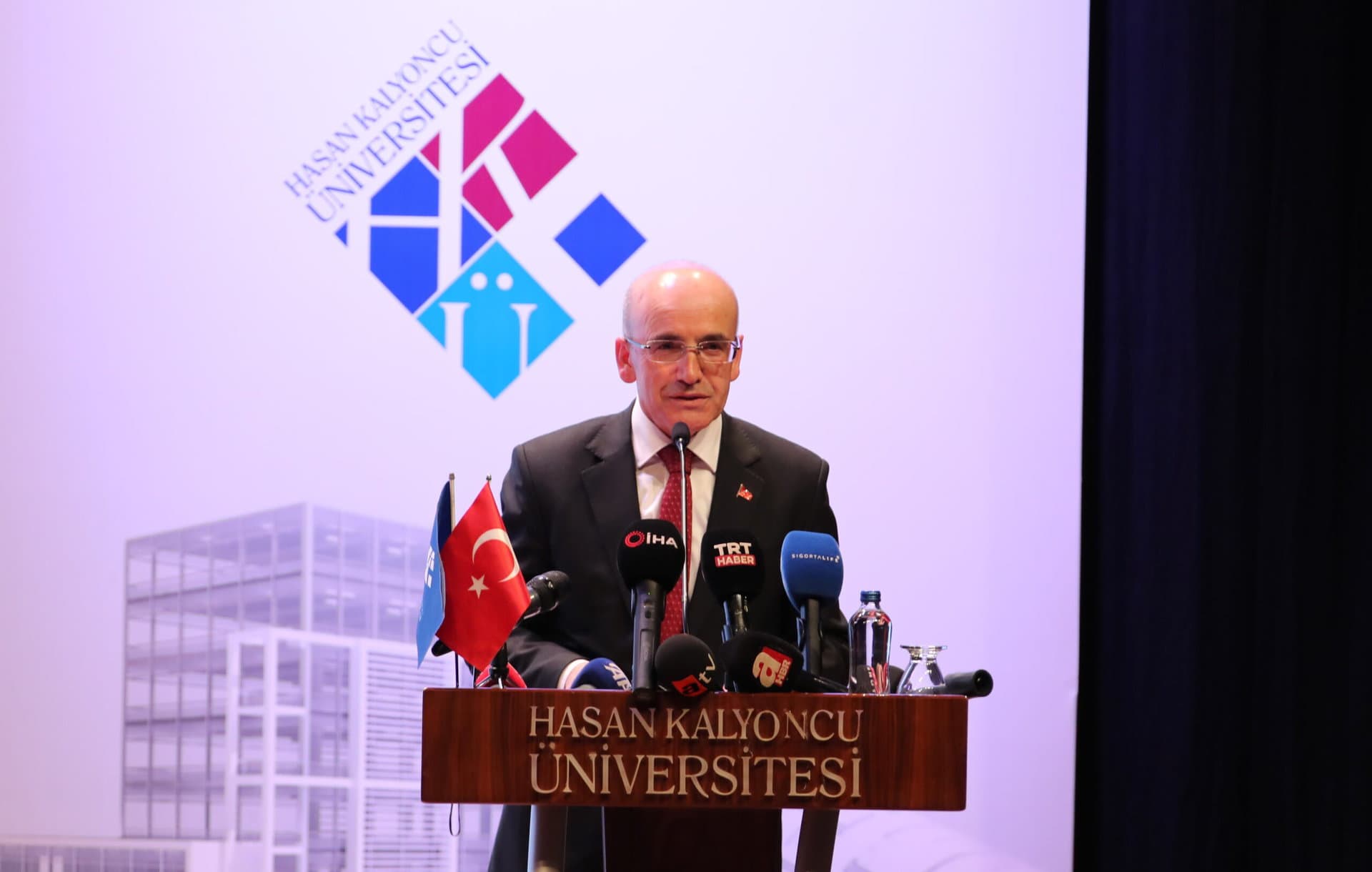
Attending the DASK Earthquake Resistant Building Design Competition Award Ceremony, Treasury and Finance Minister Mehmet Şimşek emphasized the civic duty of learning to live with the reality of earthquakes. He stated, ‘From 7 to 70, it’s crucial for every segment of society to take responsibility for earthquake preparedness and mutual support, now more than ever. I believe that by acting together, we can overcome any difficulty and build secure futures. I salute all student friends who feel this responsibility in their hearts and work tirelessly for their country and the future of 85 million people.’
Expressing deep sorrow for the losses suffered in the February 6th earthquake, Haluk Kalyoncu, Deputy Chairman of the Board of Trustees of Hasan Kalyoncu University, highlighted the importance of ensuring citizens’ right to live in safe buildings against earthquake risks and stressed the significance of strengthening existing buildings and designing sustainable buildings for the safety and welfare of society. He commended the 145 students from 24 teams, including Hasan Kalyoncu University, Istanbul Technical University, Izmir Institute of Technology, Karadeniz Technical University, Middle East Technical University, Yıldız Technical University, and Uludağ University, for reaching the finals and combining their valuable efforts with dedication, providing hope through their courage.
Selva Eren, General Manager of Türk Reasürans, shared the excitement of young architect and civil engineering candidates in transforming the theoretical knowledge gained during their university years into practice through this competition. She expressed confidence that regardless of the results of the DASK Earthquake Resistant Building Design Competition, the preparation process and the lessons learned during the final meetings would guide them on their career journeys.
Prof. Dr. Türkay Dereli, Rector of Hasan Kalyoncu University, emphasized that Hasan Kalyoncu University, with all its academic units including the Department of Civil Engineering and the Department of Architecture, equips all its students with the most up-to-date information on earthquake engineering, earthquake awareness, earthquake safety, preparedness for earthquakes, living with the reality of earthquakes, and disaster management within the vision of sustainability. He also mentioned their strong support for scientific research in these areas.
The competition, held at Hasan Kalyoncu University in Gaziantep and lasting four days, saw 24 teams who passed the preliminary rounds present their designs in the form of building models during the final stage, which were then evaluated by jury members. The building models were tested on a shaking table simulating an earthquake and evaluated based on economic scoring and aesthetic scoring criteria.